This is the introduction to Thirty Years of Negative Peace: Mladić’s Death and Bosnia’s Ethno-National Divides by Enver Jusufovic, published in the Cordoba Research Papers series (November 2026). The complete paper is available as a PDF: read the full paper.
1. Introduction
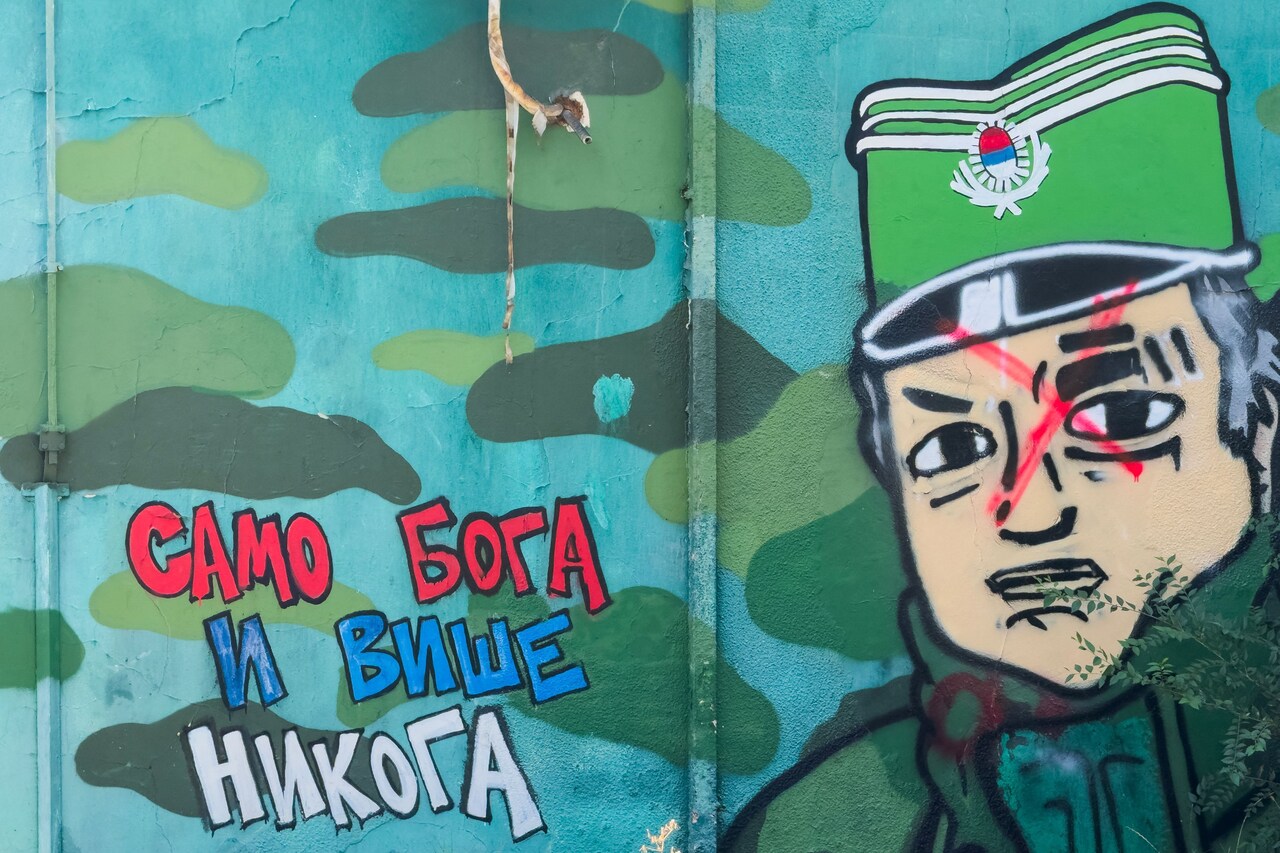
The death of Ratko Mladić on 27 August 2026, more than thirty years after the end of the war in Bosnia and Herzegovina, immediately prompted sharply divergent reactions across the country and the wider region. While survivors, victims’ associations and representatives of the Srebrenica Memorial Centre recalled the crimes for which the former commander of the Bosnian Serb army had been convicted in a final judgment, gatherings in Republika Srpska and Serbia paid tribute to him. Within days, his death had brought narratives, symbols and affiliations directly linked to the 1992–1995 war in Bosnia and Herzegovina back to the forefront of public life (United Nations 2026; BTA 2026; Ourdan 2026a).
These reactions raise a question that extends well beyond the figure of Ratko Mladić. Since the Dayton accords of 1995, Bosnia and Herzegovina has not experienced a widespread resumption of armed conflict. Yet ethno-national affiliations continue to shape aspects of political, institutional, territorial, educational and social life.
This contrast makes it necessary to distinguish between the cessation of war and the deeper transformation of conflict. Johan Galtung’s concept of negative peace and John Paul Lederach’s approach to conflict transformation provide a useful framework for this purpose. Both make it possible to assess peace by more than the absence of armed violence, drawing attention to changes in the structures and relationships shaped or reinforced by conflict (Galtung 1969; Lederach 2003).
 AFP
Applying the concept of negative peace1 to Bosnia and Herzegovina is not new. Previous studies have examined the gap between the stability of the post-Dayton order and the limits of reconciliation, or the transformation of structures inherited from the war (Clark 2009; Begičević and Balint 2023). This article has a more specific aim: to explore the connections between the persistence of certain group boundaries, the current quality of intergroup relations, the ways in which different lines of division can overlap, and their potential to regain prominence when tensions rise.
The article therefore asks: to what extent, more than thirty years after Dayton, have relations and ethno-national boundaries in Bosnia and Herzegovina been transformed beyond the cessation of violence alone, and what does the death of Ratko Mladić reveal about the depth of this transformation?
The analysis begins by distinguishing negative peace from conflict transformation. It then examines the persistence of these boundaries in institutions, territorial organisation and education, before turning to trust and relations between groups. It explores how different lines of division can intersect or overlap, weakening or strengthening their influence on political and social life, and how periods of tension can intensify these dynamics. Finally, reactions to Mladić’s death provide an opportunity to examine how these dynamics manifest themselves in an already fragile political context. The question is not simply whether peace has endured, but what it has actually changed.
Continue reading. The full paper goes on to distinguish the end of war from the transformation of conflict, before examining where ethno-national boundaries persist – in institutions, in the urban space of Mostar and in education – and the state of coexistence, trust and social cohesion. It then shows how overlapping cleavages can reactivate these boundaries, reads Ratko Mladić’s death as a lens on post-Dayton tensions, and closes with three recommendations: developing joint projects, supporting initiatives for dealing with the past, and fostering institutional cooperation.
- For Galtung, negative peace denotes the absence of personal or direct violence, whereas positive peace refers to the absence of structural violence and to social justice (Galtung 1969, 183). ↩︎