This is the introduction to From Partnership to Autonomy: CPI’s Localization Approach in Peacebuilding by Meg-Ann Lenoble and Audrey Dell’Acqua, published in the Conflict Transformation in Practice series (November 2026). The complete paper is available as a PDF: read the full paper.
1. Introduction
Over the past decade, the localization agenda has become increasingly central to debates in the humanitarian, development, and peacebuilding sectors. Following the 2016 World Humanitarian Summit and the commitments established through the Grand Bargain, increasing attention has been directed toward strengthening the role of local actors across the humanitarian-development-peace nexus, including through greater access to resources, leadership opportunities, and decision-making authority. Concurrently, scholars and practitioners have drawn attention to the limitations of traditional international NGO models, which frequently position local organizations as implementing partners rather than as autonomous actors capable of shaping strategies, influencing policy, and directly accessing international funding. As Mulder argues, “[a]lthough they are often framed as ‘partnerships’, these collaborations tend to be hierarchical in nature with strategic direction, funding and monitoring primarily coming ‘from above’ and implementation, reporting and compliance primarily coming ‘from below’” (Mulder, 2023, p. 2).
Numerous scholars and practitioners contend that localization only becomes meaningful when it is grounded in equitable partnerships that enable the sharing of capacities, knowledge, and decision-making authority among all actors involved (Barbelet, 2018; Roepstorff, 2020; Manandhar, 2026). Manandhar (2026) emphasizes that localization is undermined when local actors bear implementation risks without corresponding decision-making power, when accountability mechanisms prioritize upward reporting over community accountability, and when international organizations maintain strategic control while transferring operational responsibilities. In this regard, the concept of complementarity is central to effective localization. Barbelet (2018, p. 17) defines complementarity as “an outcome where all capacities at all levels – local, national, regional, [and] international – are harnessed and combined in a way that supports the best humanitarian outcomes for affected populations.” This definition underscores the need to recognize and leverage the comparative advantages of actors at different levels to achieve more effective humanitarian outcomes.
Within this context, the Cordoba Peace Institute – Geneva (CPI) has developed an accompaniment-based approach aimed at strengthening the institutional autonomy and sustainability of local peacebuilding organizations operating in fragile environments. For CPI, institutional autonomy refers to the ability of local organizations to independently design, implement, manage, govern, and resource their peacebuilding initiatives while maintaining accountability to their constituencies. Rather than functioning solely as an operational international partner, CPI positions itself as a technical advisor, mentor, and facilitator supporting local actors in building sustainable organizational structures, governance systems, and technical peacebuilding capacities.
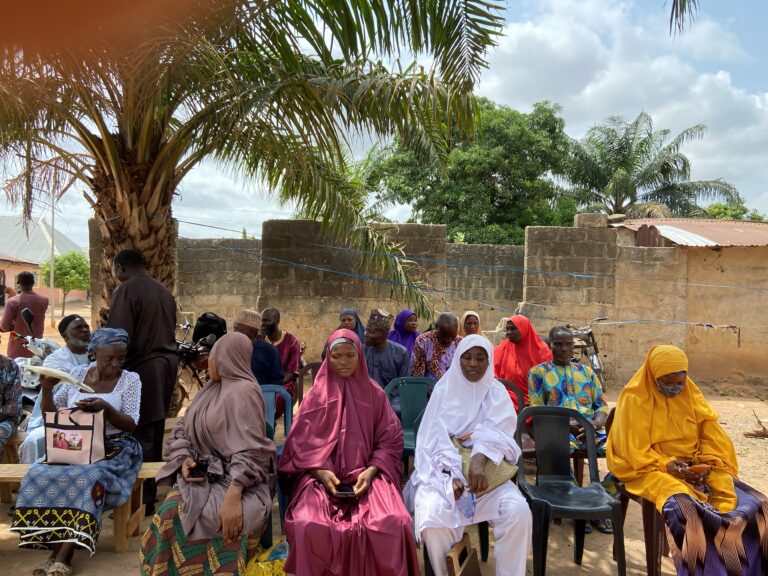
This paper presents CPI’s approach of reciprocal partnership through the example of the Dar Al Andalus Centre (DAAC)1 in Nigeria, while briefly referring to similar experiences in East Africa. It argues that meaningful localization in peacebuilding requires long-term investment in institutional strengthening, governance, technical accompaniment, and network-building in order to support the emergence of resilient local organizations capable of independently leading peacebuilding initiatives.
Continue reading. The full paper goes on to set out CPI’s approach to localization and reciprocal partnerships and its alignment with the SDC’s Locally Led Cooperation Strategy, before examining the case of DAAC in Nigeria and comparative insights from Friends of Peace in Tanzania. It closes with reflections on mutual learning and institutional transformation, along with lessons learned and recommendations.
Featured image: Partnership vs Autonomy © iStock | akinbostanci