Afghanistan Monthly News Roundup – March-April 2026
1 May 2026
Within the framework of the Fiqhi Pathways project implemented jointly by CPI-Geneva and the Swiss FDFA’s Peace and Human Rights Division, engagement with Deobandi scholars of or close to Taliban is pursued to promote governance in line with IHL and Islamic jurisprudence through Fiqhi dialogue exchanges. This monthly newsletter aims to keep track of the discussions and debates among scholars on issues of governance policies of the Taliban, especially in the areas of education, social policies, and statecraft and governance institutions.
The views and perspectives contained in these Blogs are from individual contributors and external sources, and do not necessarily reflect the opinions or position of the Cordoba Peace Institute – Geneva. The links are neither intended as an endorsement of particular publications nor the only source for the updates, but to connect to information in the public domain, for those interested in background or further details.
By M. Roshanzi
- Taliban’s Supreme Leader Publishes Book defining Official Creed
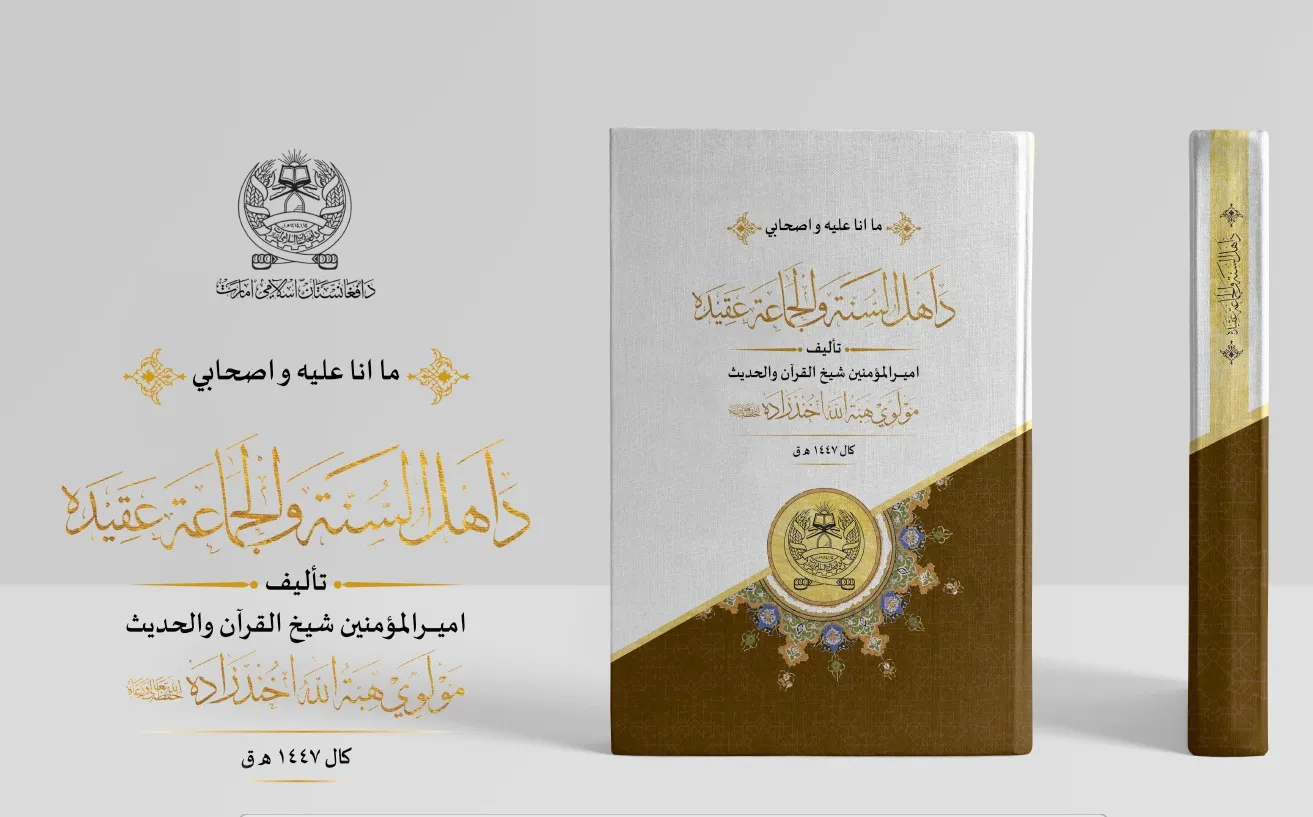
In early March 2026, Supreme Leader Sheikh Hibatullah Akhundzada published Da Ahl-e Sunnat wal Jamaat Aqeedah, a Pashto-language book presented as an authoritative statement of Islamic doctrine from the Taliban leadership. Printed in Islamic year 1447 AH as a first edition, the book sets out a structured and comprehensive account of creed, aiming to define what it presents as the correct Sunni belief system.
The book is organized into a series of doctrinal chapters covering the foundation of belief and its major theological themes. These include a preface on the importance of correct creed, belief in Allah and His attributes, Islam, the angels, the Noble Quran, Prophet Muhammad and his prophethood, the eternal covenant, divine decree, the Preserved Tablet and the Pen, the Throne and the Footstool, the people of the Qibla, the details of faith, avoiding differences, faith in the Barzakh and the Day of Resurrection, the special creeds of Ahl-e Sunnat wal Jamaat, and love for the righteous predecessors.
The preface gives the book’s main argument in a very direct way. It states: “The prophets (peace be upon them) paid special attention to correcting the creed and declaring the oneness of Allah at the beginning of their call to their nations.”[1] The text then insists that correct creed is the foundation of Islam and that deeds are not valid without it. In its formulation, faith that can save a person from divine punishment has two parts: sound creed and action according to Sharia. The book’s overall message is that belief must come first, and only then do religious actions have real spiritual value.
The book draws on trusted references of Ahl-e Sunnat wal Jamaat creed and presents the topics in a clear and accessible manner. It is intended for teachers, students, and general readers. According to the publication announcement, Dari, Uzbek, Turkmen, and other language translations will be printed soon.[2]
Codifying Creed as State Doctrine
The publication of a formal creedal book by the Supreme Leader represents a significant step in the Taliban’s long‑term project of centralising religious authority. Unlike previous statements or fatwas issued on specific issues, this book systematically defines what correct belief is—and, by implication, what deviations are unacceptable.
Afghanistan has historically followed the Maturidi school of theology (within the Hanafi legal tradition), but without a single, state‑enforced creedal text. Various Deobandi, Sufi, Shia and Salafi interpretations have coexisted, sometimes uneasily. By issuing Da Ahl-e Sunnat wal Jamaat Aqeedah, the Supreme Leader is asserting his role as the ultimate arbiter of doctrine, similar to how the book’s structure mirrors classical works of aqeedah (such as those by Imam Tahawi or Abu Hanifa).
The release of the book has generated discussion across our big cities, academic circles, and social media platforms, particularly on X (formerly Twitter). Reactions have been mixed.
Taliban‑affiliated scholars and officials have praised the book as a necessary clarification of Islamic belief in a time of confusion. A post from the chief spokesperson’s account described it as “an important work written by the esteemed Amir-ul-Momineen, may Allah protect him, on the creed of the Ahl-e Sunnat wal Jamaat,” noting that it collects creedal topics in a clear and easy manner.³ Some commentators highlighted that the book will be translated into multiple Afghan languages, making it accessible across the country.
Some independent Kabul‑based scholars have expressed concern that the book has not enough detail to learn from or lacks a proper knowledge side. To them, it seems more like a political move to show the government’s creed over others, rather than a genuine scholarly work.
An Afghan religious figure who spoke to this newsletter anonymously expressed concern over the lack of sufficient detail in the book. He said that only short texts from the Quran and Hadith have been copied and put alongside Pashto translations, with little explanation or contextual tafseer. “This is not the kind of deep scholarly work that can guide people on complex matters of creed,” he said.⁴
Creed as a Tool of Governance
The timing and content of Da Ahl-e Sunnat wal Jamaat Aqeedah suggest multiple strategic objectives. First, it consolidates the Supreme Leader’s religious authority. By publishing a comprehensive creed under his name, Akhundzada positions himself not merely as a political ruler but as a theologian and spiritual guide. The book is expected to be preached and printed at a high level, taking a central place in religious study circles. In a country where diverse Islamic interpretations have long coexisted, the book offers a single, state‑approved reference that can be used to exclude or weaken other scholars’ works on aqeedah—particularly those of Salafi and Shia traditions. It also prepares the ground for further religious regulation. Following February’s Law on Preaching (which dictates what preachers must teach), the creed book supplies the content that preachers will be expected to convey.
However, the book also carries risks. By committing to a written creed, the leadership may invite internal theological debate it cannot easily control. Moreover, the requirement to translate the book into Dari, Uzbek, Turkmen, and other languages suggests an intention to impose this creed on other schools of thought—a move that could generate resistance in regions with strong local scholarly traditions and teaching circles.
For observers of Taliban governance, the publication of Da Ahl-e Sunnat wal Jamaat Aqeedah marks another step toward a fully centralized religious establishment. But what stands out most is the lack of detailed tafseer and substantive explanation in the book itself. Rather than offering deep insights into the sections it covers, the text largely presents Quranic verses and Hadith with basic translations. Critics argue that the goal is not to educate but to enforce a unified creed from the top down, leaving little room for scholarly nuance or local interpretive traditions. Whether Afghan society will accept this doctrinal imposition, or whether alternative interpretations will persist informally, remains to be seen.
- China‑Mediated Talks Yield Partial Breakthrough between Afghanistan and Pakistan
In late March 2026, Afghan and Pakistani officials held a new round of peace talks in Urumchi, China, mediated by Chinese diplomats. The discussions were aimed at de‑escalating cross‑border violence that has intensified over the past year. According to sources familiar with the talks, but wish to remain anonymous, the two sides reached a limited agreement: Pakistan would stop aerial bombing of Afghan cities, including Kabul, while the Taliban would cease drone attacks targeting Pakistan’s capital, Islamabad. Both parties have reportedly committed to avoiding strikes on each other’s major urban centers. However, no final agreement was reached on ending hostilities along the Durand Line. Border clashes, artillery shelling, and ground incursions continue in provinces such as Kunar, Nangarhar, and Khost. The underlying disputes over militant sanctuaries and cross‑border movements remain unresolved.
The Urumchi talks represent a modest step forward but fall short of a comprehensive ceasefire. Observers note that the agreement, that appears to be holding, primarily protects civilian populations in major cities while leaving rural and border communities exposed to continued fighting. Whether China can pressure both sides to extend the agreement to the entire border remains an open question.
References
¹ Excerpts from the preface of Da Ahl-e Sunnat wal Jamaat Aqeedah, author’s translation from Pashto.
² Announcement on AMU TV: https://amu.tv/fa/229909/
³ Twitter post by Taliban chief spokesperson account: https://x.com/i/status/2030585749930729746 (accessed March 2026)
⁴ Anonymous interview with a Kabul‑based religious scholar, conducted March 2026.