
The marginalised nomadic groups of the African Sahel – Tuareg, Arabs, Fulani, Toubou, Kanuri and others – raise a deep problem that calls into question their relations with states and with the other ethnic groups that make up those national entities. The massacres suffered by the Fulani in Mali have shown the need to study the question and propose comprehensive, consensual solutions to it.
By: Abdoulaye Mamadou Bâ
By: Abdoulaye Mamadou Bâ
The marginalised nomadic groups of the African Sahel – Tuareg, Arabs, Fulani, Toubou, Kanuri and others – raise a deep problem that calls into question their relations with states and with the other ethnic groups that make up those national entities. The massacres suffered by the Fulani in Mali have shown the need to study the question and propose comprehensive, consensual solutions to it.
The African Sahel, stretching from Mauritania in the west to Chad in the east, has faced a complex security situation since the emergence, at the turn of the millennium, of violent armed movements with a religious background, commonly known as “jihadist”. The situation deteriorated feverishly after the collapse of the Libyan regime and the killing of Colonel Muammar Gaddafi in October 2011, which led to a large and striking influx of fighters and weapons into the region and rekindled some rebel movements, particularly in northern Mali. In a short-lived tactical alliance between the “jihadists” and those movements, especially the National Movement for the Liberation of Azawad (MNLA), northern Mali was taken over in 2012, and the MNLA declared the secession of the north in April 2012. The capital, Bamako, itself almost fell under “occupation” – had France not decided to intervene in January 2013 with a rapid-deployment military force. The French military presence scattered the bases of the “jihadists” who were fighting on the ground in the ranks of al-Qaeda in the Islamic Maghreb, the Movement for Oneness and Jihad in West Africa (known in French literature as MUJAO), Ansar Dine, or some of the local militias allied with or affiliated to one of them. The French intervention also cornered the rebel political movements, which only managed to get out with great difficulty, by signing a peace agreement – known as the Algiers Agreement – on 15 June 2015 under international sponsorship.
The slow start in actually implementing the Algiers Agreement led to political and security confusion and a ramification of the Malian crisis at home, with serious repercussions for all the countries of the region.
The road to Bamako and the dragging of the Fulani into the crisis
The Malian army withdrew rapidly from all the northern regions before the hordes of “jihadist” battalions and separatist units, and with its withdrawal every sign of the state disappeared as the Malian administration left entirely. The Mopti region, in the centre of the country, thus became the last area where symbols of Malian sovereignty were present in those borderlands, and turned into a dividing line between northern and southern Mali. The “jihadists” and their allies even made the town of Konna, a few dozen kilometres from Mopti, a forward post. From Konna, inhabited mainly by Fulani, the advance on Bamako was planned. As part of that planning, all the non-Arab, non-Tuareg “jihadist” fighters – who might be called the “black jihadists” – in the various “jihadist” movements and battalions were gathered into a single battalion, named the “Macina Battalion of Ansar Dine”(1) (external website, opens in a new tab). Since most of its fighters were Fulani (although there were also Bambara, Songhai, Dogon, Mossi and other African fighters), command of the new battalion was entrusted to the Fulani preacher Mohamed Sada Barry, known as “Amadou Koufa”, who had been active in Ansar Dine, founded a few months earlier under the Tuareg leader Iyad Ag Ghaly, known as Abu al-Fadl. The Macina Battalion was conceived as a local front for “jihadist” action in a region where fame and leadership belonged not to Africans but to foreigners, particularly Algerians, Mauritanians and other fighters who had come, especially from Arab countries(2) (external website, opens in a new tab).
Tactically, the Macina Battalion was meant to spearhead the advance south towards the Malian capital, Bamako. At that moment, the “jihadists” – perhaps unwittingly – wrote two important chapters that would later shape the course of the Malian crisis to this day: the French intervention, on the one hand, and on the other the dragging of the Fulani into the thick of the conflict – at first an incidental presence in the crisis, before the Fulani became the primary target of counterterrorism policy in Mali and in large parts of the Sahel(3) (external website, opens in a new tab).
Ethnic militias and “security contracting”
When the “jihadists” took control of the north and parts of the centre of the country, insecurity spiralled and looting spread widely. The looting, organised by some of the movements in control of the area, targeted the Fulani’s cattle herds in particular, forcing them to take up arms to defend themselves and protect their livestock. Given the strong presence of members of the Movement for Oneness and Jihad (made up mainly of local nomadic Saharan Arabs), the Fulani clans allied themselves with them: they acquired weapons, and young Fulani were trained to use them by members of the movement(4) (external website, opens in a new tab). This development angered the other African groups living alongside the Fulani in the region, particularly the Bambara, Dogon and Bozo. On the basis of the relationship between the Fulani and the Movement for Oneness, most people in the other groups came to see the Fulani as allies of the jihadists. This sweeping judgement – later to become a pretext for the mass killing of Fulani – was compounded by the view, held by many local social and political actors from neighbouring groups, that the Fulani were the social and doctrinal incubator of the jihadists(5) (external website, opens in a new tab). To justify this position, they point to the Fulani’s strong attachment to Islam and to the clear influence of Islam on their way of life, their cultural life and their conduct towards others.
Historically, the Fulani are among the peoples who gave Islam a considerable impetus on the African continent: they carried the banner of the faith across its regions and founded kingdoms and states modelled on the caliphate in many of today’s Sahel countries and beyond(6) (external website, opens in a new tab). In the 18th century they founded an Islamic state in the Fouta Djallon, in the centre of present-day Guinea. In the 19th century, between 1818 and 1886, they founded the Fulani Islamic empire of Macina under Emir Sékou Amadou Barry, whose authority stretched from what is now central Mali north to the Timbuktu region. At about the same time, the scholar Usman dan Fodio led the Islamic emirate of Sokoto and Adamawa in today’s Nigeria, Niger, Cameroon and parts of Chad. To the west, between 1776 and 1890, the Fulani founded an Islamic emirate, the Almamate of Fouta Toro in the Senegal River basin, which ruled many areas of present-day Mauritania and Senegal according to Islamic law and brought many neighbouring groups bordering its sphere of influence under the Islamic faith and its rule.
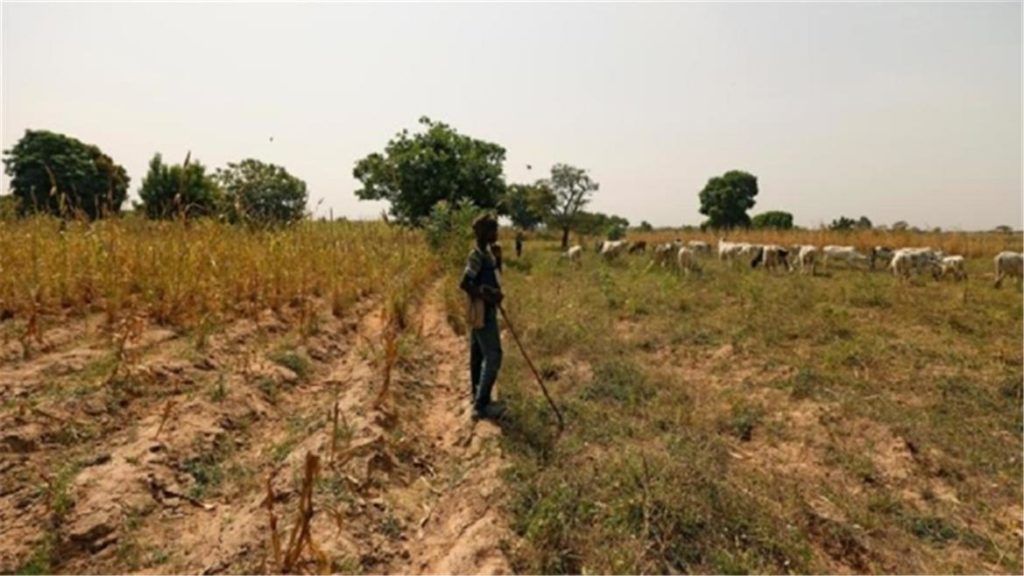
The Fulani were also at the forefront of military resistance and spiritual opposition to the entry of France and other colonial powers into the region(7) (external website, opens in a new tab). After French, British, Spanish and Portuguese colonialism extended its control over the area they had ruled, the Fulani lived in an isolation dictated by their nomadic life and by the need to follow the transhumance of their cattle, a vital element of their culture and their main source of livelihood. Throughout the decades that followed the collapse of their kingdoms, the Fulani lived on the margins of colonial control, avoiding as far as possible contact with the colonial power or its allies, and keeping away from its towns, schools and institutions. That wariness has remained the hallmark of the Fulani’s relations with central governments in many modern states. Statistics put their number at about 68 million, scattered across more than 18 African countries, from Mauritania in the west to Sudan in the east, and from Mauritania in the north to Cameroon and the Central African Republic in the south(8) (external website, opens in a new tab).
Some observers believe that the fear among neighbouring African groups that the Fulani might rouse themselves, regain their influence and possibly once again dominate the region’s vital space through the jihadist gateway may be one of the explanations for the widespread killings and repeated massacres they suffer at the hands of tribal militias in central Mali, Burkina Faso, Niger and elsewhere. In Mali, it looks like a repeat of the experience of the Ganda Koy and Ganda Izo militias, which acted bloodily against the Tuareg and Arabs in northern Mali during the first rebellions in the early 1990s(9) (external website, opens in a new tab). Since then, playing on local tensions and on the disputes between groups has seemed the shortest route to mobilising rivals and clans, organising them militarily and preparing them to impose security on behalf of the state and with its blessing. This is often used and directed against a particular ethnic group or specific clans. Some observers consider that this mechanism is adopted in certain high decision-making circles as a kind of response to the security and political challenges facing the successive regimes that have governed the country.
The spectre of the Macina Battalion and the horror of the massacres
The Macina Battalion began operating in central Mali in 2015 by targeting the traditional symbols of the Fulani in the area: it destroyed the mausoleum of Sheikh Ahmad ibn Ahmad al-Kabir, founder of the Islamic empire of Macina, in Hamdallaye, the empire’s historic capital. It then put pressure on Sufi sheikhs to adopt Salafi thought, hunting them down or killing them, which led many of them to take refuge in Bamako or elsewhere to save their lives. Next it targeted symbols of the state and its agents, who generally left the area, leaving citizens of all ethnic groups and clans to face the situation alone: schools closed, basic services disappeared, security vanished, lawlessness spread and organised crime and banditry emerged, bringing the local economy to a standstill in most parts of central Mali.
The situation began to take a dangerous turn in 2012 with killings targeting unarmed people of all ethnic groups, including the Dogon: many of their elders were assassinated and work on the farmland they cultivated was disrupted. Some of their fishermen were prevented from reaching the banks of the Niger River, the only vital water source in the area; farmland was left unguarded and open, and herd owners no longer respected the transhumance seasons or the boundaries of the traditional routes and corridors set aside for that purpose(10) (external website, opens in a new tab). This led to an escalation in chaotic competition and conflict over natural resources, which shrank considerably and benefited only those who bore arms or enjoyed their blessing, paralysing the rural economy on which people depend for their livelihood. As a result, the rules of peaceful coexistence between communities broke down, and all the traditional, locally known balances for managing disputes were upset, while the justice system was entirely absent, its officials having deserted the area. In any case, official justice had been widely criticised: people accused it of slowness and of widespread bribery among its officials, which had cost it all credibility. People welcomed the “jihadists’” religious policing and courts when they took hold of the region, regarding them as “quicker to settle cases, fairer between litigants and free of the bribery known among public officials”(11) (external website, opens in a new tab).
Given the strong Fulani presence among the Macina Battalion’s fighters, some activists from other groups – particularly the Dogon, some of whom are Christians and some followers of traditional religions – began to regard their Fulani neighbours as allies and supporters of the jihadist battalion active locally. Little by little, from 2013 onwards, the situation moved towards the creation of protection committees to provide security in Dogon villages and rural settlements, made up of groups of traditional hunters. But the major shift came in June 2016, when the Malian government licensed an association of traditional hunters called “Dan Na Ambassagou” – meaning, in the local language, “hunters who trust in God” – to promote hunting culture. The association soon turned into a militia of the same name, with a political bureau, a military wing, field commanders and assembly points for its fighters in well-known areas. Its leaders were received at the highest levels and officially congratulated for their “active contribution to protecting security and helping the army confront the terrorists”(12) (external website, opens in a new tab).
In response, some Fulani – civil servants, scholars, researchers and community activists – tried to dispel the sweeping accusations that their community was allied with the “jihadists”, seeking to show that the Fulani were the group most scorched by the violence of the Macina Battalion in the area: it dismantled the traditional structure of society, divided it, recruited young people, imposed new codes of conduct on villagers, harassed them and booby-trapped their relations with neighbouring ethnic groups. They also pointed out that fighters from every group and community in the region were present in the battalion’s ranks(13) (external website, opens in a new tab). These appeals and explanations found no echo, particularly in the centres of political and security decision-making in Bamako. Nor did it help the Fulani in the least that some extremist Dogon activists began to use the situation as a pretext to serve local social, economic and political agendas, based on the need to contain the “jihadist tide” in the area by weakening the Fulani presence and, if possible, driving them out, in order to seize the vast grazing and farming lands owned by some of them. Violence against their villages recurred in various forms, leaving people dead and accompanied by the looting of livestock.
Dogon militias began clearly targeting Fulani civilians in a series of massacres, starting with the village of Souri in 2012 and then the village of Koulogon in early 2019, where more than 37 people were killed, the village was completely destroyed, livestock was looted and bodies were thrown into wells to foul and poison them, so that survivors would not think of returning. The survivors fled to Mopti and Bamako. Although the government announced investigations into these massacres, it has so far announced no arrests or prosecutions of the presumed perpetrators, giving the impression that those responsible enjoy protection at the highest levels, exempting them from prosecution and guaranteeing their impunity. At the same time, there are repeated reports of mass arrests of Fulani in the same area on terrorism charges.
The massacres of Fulani in central Mali took a dangerous turn with the Ogossagou massacre in the Bankass circle(14) (external website, opens in a new tab), on 23 March 2019, when militiamen believed to be from the Dogon “Dan Na Ambassagou” attacked the village in an attempt to wipe out its population, killing unarmed civilians including infants, pregnant women and the elderly. According to the lawyer Al-Hassan Barry, the attackers began by slaughtering the village imam and chief in front of his mother and family, before killing everyone with live ammunition and burning the bodies after mutilating and dismembering them. According to official sources, the massacre left more than 160 dead and more than 60 wounded; 410 houses and 80 granaries and food stores were burned, and hundreds of animals were shot dead.
As an initial reaction, the Malian government announced a series of decisions, including a pledge to open an impartial investigation, the dissolution of the “Dan Na Ambassagou” militia on 24 March 2019, the dismissal of some army commanders, the deployment of additional military units to the area to protect civilians, and the launch of a disarmament process for all factions and militias on the ground. The “Dan Na Ambassagou” militia rejected the government’s decisions outright, and its military commander, Youssouf Toloba, expressed his “force’s readiness to enter into open confrontation with the Malian army should it seek to disarm them by force”, demanding “credible mechanisms for dialogue and the containment of armed Fulani in the area”(15) (external website, opens in a new tab).
To this day the security situation in the area remains volatile, with continued violence against civilians, particularly Fulani, forcing them to flee their homes and property. Most of them now live in a dire humanitarian situation, amid the authorities’ inability to respond appropriately and a marked passivity on the part of the foreign humanitarian bodies present in the area – particularly regarding the blockades imposed on the inhabitants of dozens of Fulani villages in the Koro and Bankass circles, where Fulani cannot leave their villages to buy supplies at the markets or meet other needs. In Bamako, for example, some 120 Fulani families displaced from their villages in the centre have been living for almost a year on a rubbish dump in the Faladié district, with no initiative to rescue them from hunger, disease and the daily deaths of children that haunt them. The same scenario is repeated wherever displaced Fulani are found in the country, as in Mopti and Ségou. Thousands more live as forced refugees in neighbouring countries, particularly Burkina Faso, Niger and Mauritania, fleeing the brutality of Dogon militias or of some armed Tuareg groups such as GATIA or the Movement for the Salvation of Azawad (MSA), which are supported by French forces, or of elements of the Malian army, or out of fear of the terror of other armed groups(16) (external website, opens in a new tab).
Other flashpoints and the impotence of the “international community”
In northern Mali, in the Gourma region – specifically in Gao, on the border between Mali and Niger – Fulani clans living on the front lines are under intense security pressure, accused by governments of being allied with supporters of the “Islamic State”. They are often attacked by the Tuareg GATIA militia, which recruits from the Imghad clans and operates under the command of General El Hadj Ag Gamou, an officer in the Malian army, or raided by fighters of the Movement for the Salvation of Azawad, led by Moussa Ag Acharatoumane, a former cadre who broke away from the MNLA, whose fighting units are drawn from the Idaksahak clans and some factions of the Chamanamas. These two movements work in coordination with the Malian and Nigerien forces and the French Barkhane units in the fight against terrorism. With no strict adherence to the international rules governing combat operations, no international oversight and no respect for human rights principles, accusations keep mounting that these operations systematically target the Fulani on the pretext that some of them support terrorism. For their part, some armed Fulani, including those affiliated with “jihadist” organisations, carry out bloody raids against members of these Tuareg clans, particularly in the Ménaka region of northern Mali. A Fulani clan militia drawn from the Tolèbé lineage is also active along the tri-border area between Niger, Mali and Burkina Faso. It claims to be “acting in self-defence to protect its members and to defend the rest of the Fulani from the killings and targeting they suffer at the hands of the region’s armies and armed groups, with international blessing, particularly that of France”(17) (external website, opens in a new tab).
In Burkina Faso, the situation is very similar to what is happening in Mali. After the feverish activity in the northern province of Soum of Ansarul Islam – led by the Burkinabè Jafar Dicko (himself Fulani) and affiliated with the Group for the Support of Islam and Muslims (JNIM) – and the spread of elements linked to the “Islamic State” in the Fada N’Gourma region in the east, large-scale targeting of the Fulani began at the hands of the Koglweogo militias – meaning “guardians of the forest” – drawn from the Mossi, as well as some members of the Burkinabè army. These killings peaked with the massacre of Yirgou in the centre-west of the country, where more than 200 Fulani were exterminated on 2 and 3 January 2019. On 10 April 2019, large-scale atrocities were committed against another group of Fulani in the village of Arbinda, claiming more than 100 lives according to some independent sources, while the government speaks of some 25 dead. The Burkinabè Movement for Human Rights accuses the Burkinabè army of committing crimes of extermination against the Fulani in many areas as part of the fight against terrorism. Here too, the absence of any serious, impartial investigation and the failure to prosecute the perpetrators are striking, suggesting a will to protect them at many levels(18) (external website, opens in a new tab).
In Niger, the Fulani are at the centre of violence in many parts of the north and west of the country, particularly in the Diffa region, where the violence is driven by Boko Haram, and in northern Tillabéri, where the Group for the Support of Islam and Muslims and the “Islamic State” operate alongside a range of tribal and ethnic militias of various leanings, with a considerable presence of organised crime networks. In other countries, such as Nigeria, Togo, Benin, Ghana and Côte d’Ivoire, the violence takes other forms: Fulani cattle herders are often party to bloody conflicts with farmers over control of pasture and water points and the opening of transhumance corridors for their herds(19) (external website, opens in a new tab).
Conclusion
Faced with all these many forms of bloody violence rampant in the region, the role of international organisations such as the United Nations and the African Union, of regional bodies such as the G5 Sahel and the Economic Community of West African States (ECOWAS), and of partners on the ground, particularly France, remains controversial and raises many questions – especially when it comes to the duty to protect unarmed civilians targeted by armed groups, “jihadist” or otherwise, by tribal or ethnic militias, or by units of the regular armies operating in the region under the banner of counterterrorism.
The truth is that the targeting of the Fulani in the region carries serious risks and repercussions for the situation in the Sahel and in West Africa generally. The repeated massacres against them, amid a suspicious international silence, have provoked a wave of indignation across large parts of the continent, and voices are growing louder calling for a transnational Fulani front to defend their existence, dignity and rights in Africa. This “systematic targeting” may lead Fulani citizens from many countries to feel the need to close ranks, creating a new reality with lasting consequences for the region’s future – perhaps even the violent beginning of a redrawing of its map, with all the dangers that entails.
The essential question remains unanswered: why are the Fulani targeted in particular, rather than others, in a region where young people from all or most ethnic groups are involved in dynamics of violence, whether under the jihadist banner or otherwise?
Some believe that the violence currently inflicted on the Fulani aims only to punish them for holding fast to the religion of Islam and its values, clinging tenaciously to their faith, keeping away from the debasing cultural influences inherited from French colonialism, and refusing to join the current French counterterrorism strategy as some groups and clans have done. But is that alone enough to explain what is really happening?
Given the nature and map of violence in the Sahel and West Africa, it appears that nomadic and semi-nomadic groups that have long lived on the margins of institutions and extend across borders – Tuareg, Arabs, Fulani, Toubou, Kanuri, Hausa and others – raise a deep problem that calls into question their relations with states and with the other ethnic groups that make up those national entities. Hence the question: should not all local and international actors think seriously about a comprehensive framework – for example, by organising an international conference to study the question and propose comprehensive, consensual solutions to it?
*Abdoulaye Mamadou Bâ: researcher on human rights and peace in Africa and the Sahel, Cordoba Foundation of Geneva, Nouakchott, Mauritania.
References
(1) Mohamed Mahmoud Abou al-Maali, Al-Qaeda and Its Allies in Azawad (in Arabic), Al Jazeera Centre for Studies, 1st edition, 2014, p. 160.
(2) Ibid., p. 25 ff.
(3) See: “The question of northern Mali and ‘the old man who saw the crescent’” (in Arabic), Aqlam Hurra website, 6 February 2013, accessed 4 April 2019:
aqlame.com (external website, opens in a new tab)
(4) Mohamed Mahmoud Abou al-Maali, Competition between al-Qaeda and the Islamic State in the Sahel and Sahara (in Arabic), Al Jazeera Centre for Studies, 1st edition, 2017, p. 233.
(5) See:
En Afrique, le fantasme d’une « communauté peule » radicalisée, Le Monde, Publié le 05 septembre 2018, vu le 5 Avril 2019:
En afrique le fantasme d’une communaute peule radicalisee (external website, opens in a new tab) · Le Monde
(6) See: “The Ogossagou massacre in Mali: a reading of the roots of the crisis” (in Arabic), Qiraat Ifriqiya website, 9 April 2019, accessed 7 April 2019:
qiraatafrican.com (external website, opens in a new tab) /
(7) Mohamed Said Bah, The Fulani in the Procession of Islamic Civilisation: Giving and Receiving (in Arabic), Mauritanian Centre for Studies and Strategic Research, 21 July 2016, accessed 6 April 2019:
cmers.org (external website, opens in a new tab)
(8) See:
Boukary Sangare, Peuls et djihadisme dans les pays du Sahel et d’Afrique de l’Ouest, Observatoire du monde arabo-musulman et du Sahel, Fondation pour la recherche stratégique, publié le 8/2/2019, vu le 5 Avril 2019:
Peuls et djihadisme dans les pays du sahel et d’afrique de l’ouest (external website, opens in a new tab) · frstrategie.org
(9) See:
Le centre du Mali abandonné à la violence des milices, France 24, Première publication: 28/03/2019, vu le 5 Avril 2019:
Centre mali violence milices peuls dogons jihadistes ddr (external website, opens in a new tab) · France 24
(10) The caliphate system of the Islamic state of Macina laid down clear rules governing the management and use of land, guaranteeing the rights of all users: areas were designated for farming and others for transhumance, and compulsory livestock corridors were marked out for the farming seasons, with set periods and seasons for this.
(11) Most field studies conducted on the situation of the population in northern and central Mali when the “jihadists” controlled those areas report that people largely accepted the way the “jihadists” administered justice and the nature of their rulings in matters other than the application of hudud penalties.
(12) See:
Audience : IBK, reçoit les Chasseurs ou ” donzo ” du Mali, publié le 9/4/2019, vu le 10 Avril 2019:
MALI KANU (external website, opens in a new tab) · Facebook
(13) Mohamed Mahmoud Abou al-Maali, Competition between al-Qaeda and the Islamic State in the Sahel and Sahara (in Arabic), Al Jazeera Centre for Studies, 1st edition, 2017, p. 233.
(14) “Malian army accused of ethnic cleansing of the Fulani” (in Arabic), Al Jazeera Net, 19 June 2018, accessed 7 April 2019:
اتهامات للجيش المالي بتصفية عرقية لقومية الفلان (external website, opens in a new tab) · Al Jazeera · archived copy
(15) See:
Dissolution de la milice Dan Amassagou : Quand Youssouf Toloba défie l’État!, Par bamada.net le 29/03/2019, vu le 4/4/2019:
Dissolution de la milice dan amassagou quand youssouf toloba defie letat (external website, opens in a new tab) · bamada.net
(16) See:
Bokar Sangaré, Sahel: le recours aux milices locales pour lutter contre le terrorisme envenime les conflits communautaires, Justice Info, 25/05/2018, vu le 7/4/2019:
Sahel a la frontiere mali niger il y a une absence d’anticipation des effets… (external website, opens in a new tab) · justiceinfo.net
(17) See:
Sahel : Barkhane face au défi des affrontements entre communautés, Le Point.fr Publié le 08/01/2019 , vu le 8/4/2019:
Sahel barkhane face au defi des affrontements entre communautes (external website, opens in a new tab) · lepoint.fr
(18) See:
Daouda ZONGO: Human Right Watch accuse les armées malienne et burkinabè de «graves violations» des droits humains, 9 septembre 2017 , vu le 8/4/2019:
Human right watch accuse les armees malienne et burkinabe de graves violations des droits humains (external website, opens in a new tab) · wakatsera.com
(19) See:
Michel Lachkar: Le réchauffement climatique aggrave les conflits entre éleveurs et cultivateurs, publié le 23/04/2018, vu le 9/4/2019:
Source: العنف ضد قبائل الفلان.. إلى أين تتجه منطقة الساحل الإفريقي؟ (external website, opens in a new tab) · Al Jazeera
CPI is not responsible for the content of external websites.