

From Dialogue to Practice: Interfaith Peace building in Nigeria Middle Belt
| Authors: Audrey Dell’Acqua and Meg-Ann Lenoble
| Summary
The Middle Belt region of Nigeria faces persistent conflict and violence rooted in the phenomenon of transhumance and competition over natural resources. The region experiences frequent tensions between nomadic herders and settled farmers. While the primary drivers of the conflict relate to competition over land and water, climate stress, weak governance, and the presence of criminal networks, the crisis is widely perceived through religious and ethnic lenses. Most herders are traditionally nomadic Muslim Fulani, whereas most farmers are Christians from diverse ethnic backgrounds. These perceptions have deepened mistrust, reinforced
communal polarization, and contributed to the persistence and escalation of violence. Since 2024, insecurity has intensified, driven by the interaction of religious, ethnic, and resource-based tensions.
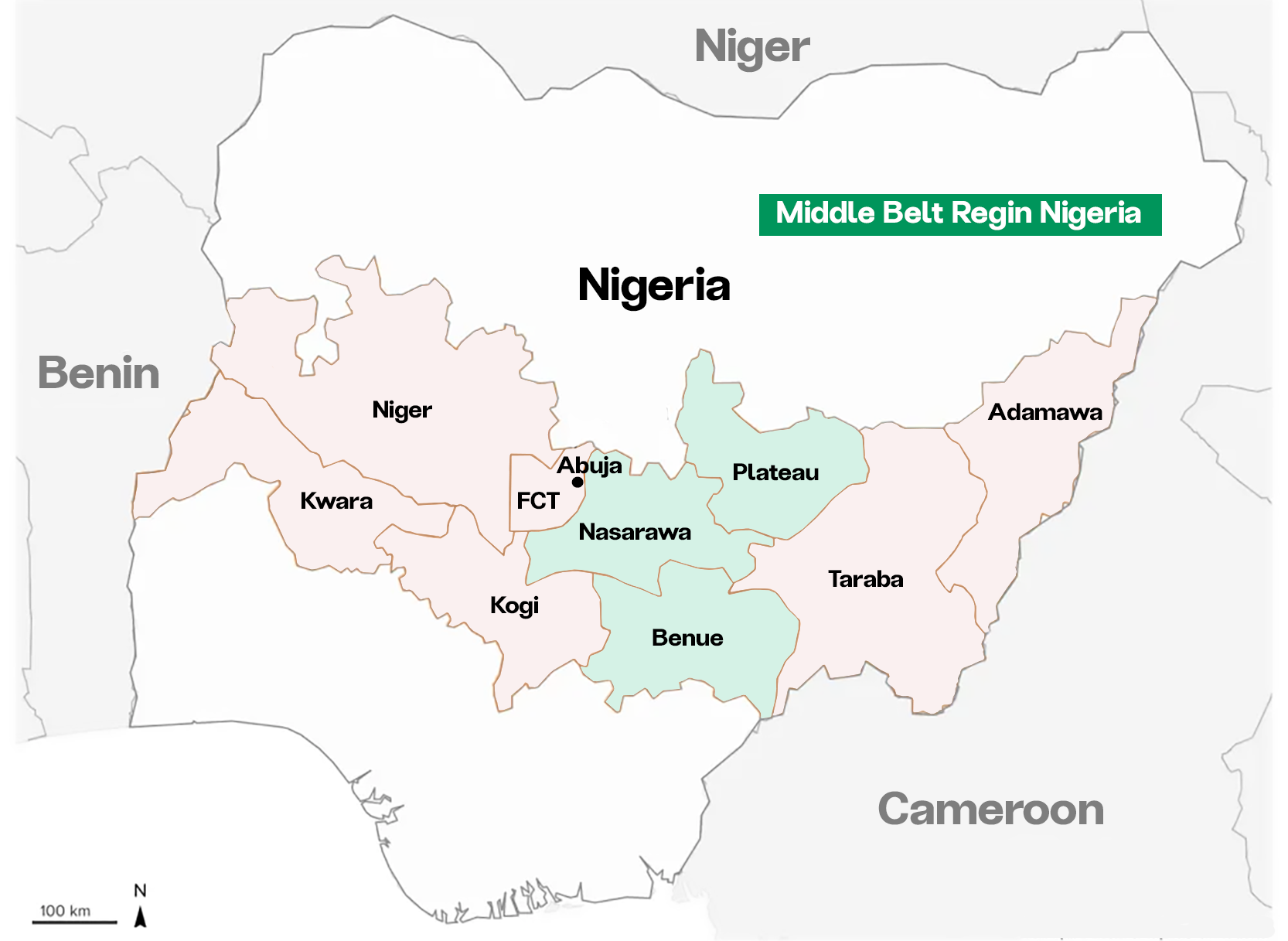
In response, Cordoba Peace Institute – Geneva (CPI) and its partners, The Development Initiative of West Africa (DIWA) and Dar Al-Andalus Centre (DAAC), implemented the 18-month European Union-funded project “Building Bridges: Preventing and Mitigating Interreligious Violence and Promoting Peaceful Coexistence in Nigeria’s Middle Belt”. The project aims to prevent and mitigate interreligious tensions while promoting peaceful coexistence among communities with diverse worldviews across three states in the Middle Belt region: Plateau, Nasarawa, and Benue. The initiative focuses on empowering religious leaders, community gatekeepers, women, and youth from both Christian and Muslim communities to act as locally credible agents of peace through community-driven and collaborative approaches.
This document presents the operational methodology jointly developed, field-adapted, and tested through the “Building Bridges” project by CPI and its Nigerian partners. The approach combines CPI’s conflict transformation framework with locally grounded faith-based peacebuilding practices, community engagement experience, and adaptive operational learning developed through implementation. It systematizes the project’s conflict transformation approach and distils key lessons for practitioners working in similarly polarized contexts.
The methodology is structured around a sequenced model combining intra-faith engagement, interfaith dialogue, and diapraxis (dialogue translated into joint action). Intra-faith engagement serves to address internal faith-based misconceptions and strengthen the theological legitimacy of religious leaders as peace actors.
Building on this foundation, interfaith dialogue creates structured spaces for mutual understanding and relationship-building between Muslim and Christian leaders. Diapraxis then operationalizes dialogue through jointly implemented community initiatives, reinforcing trust through shared action.
Drawing on monitoring, evaluation, and field experience, this paper highlights key operational lessons, enabling factors, and limitations observed during implementation. It provides practical recommendations for peacebuilding practitioners, program designers, and policymakers seeking to design context-sensitive, faith-based conflict transformation initiatives. The findings underscore that carefully sequenced engagement with religious actors, combined with locally owned joint action and ecosystem support, can contribute meaningfully to reducing interreligious tensions and strengthening social cohesion in fragile environments.
Read the full paper | PDF