by Kenza Iraki (TelQuel (external website, opens in a new tab))
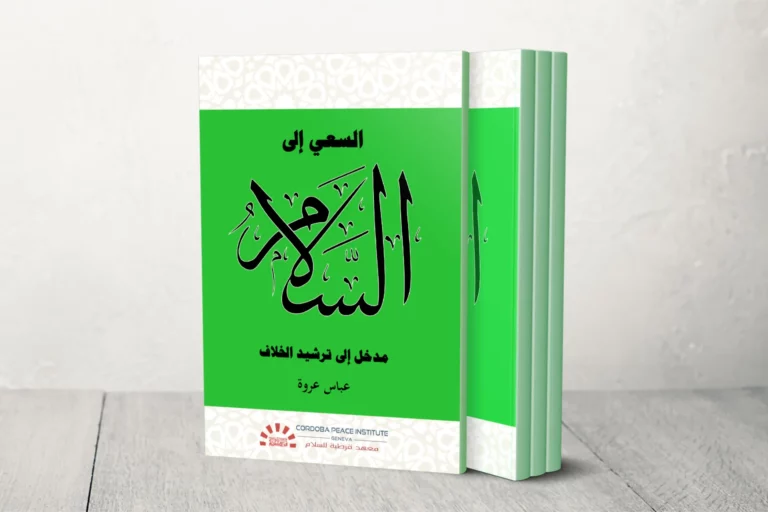
Initiated by the Cordoba Foundation of Geneva, several discussions between secularists and Islamists from the MENA region took place in Istanbul and Doha between March 2016 and March 2017. Very little about these meetings had filtered out until the publication of a statement by Al Adl Wal Ihsane, which took part in the debates.
Islamists and secularists from North Africa and West Asia (the MENA region) sat down at the same table during a series of meetings organised by a Swiss foundation that works for “rapprochement” and “exchange between the cultures and civilisations of the various communities“.
Members of the Al Adl Wal Ihsane movement took part in these meetings, among them Mohamed Hamdaoui (not to be confused with Hamdaoui of the Movement for Unity and Reform – Ed.), who is in charge of the Jamaa’s external activities.
PJD figures such as Soumia Benkhaldoun, Abdelali Hamieddine and the current head of government, Saad Eddine El Othmani, were among the speakers. The former Salafi detainee Abou Hafs also took part.
Several left-wing activists attended the series of meetings, among them the historian and activist Maâti Monjib, the former president of the AMDH, Khadija Ryadi, and the secretary general of the PSU, Nabila Mounib.
Participants held their exchanges in four workshops in Istanbul and Doha between March 2016 and March 2017, around two main themes: religion and politics in the Islamic tradition, and conceptual tools for a common space.
No information had filtered out before the publication of a statement by Al Adl Wal Ihsane (external website, opens in a new tab) explaining that “the Cordoba Foundation of Geneva has developed an initiative of cooperation between Islamists and secularists, offering an intellectual and political vision drawn from consultations and meetings among more than 40 experts and political actors from North Africa, West Asia and the Sahel”.
“I have been convinced of the need for an understanding between Islamists and secularists since the Casablanca attacks in 2003. My view is that the security current within the system has regained strength since 2003, which is pushing towards confrontation between Islamists and secularists“, Maâti Monjib told us.
A civil state or a religious state?
Few details are known about the specific topics addressed by the participants. Nabila Mounib, Khadija Ryadi, Abdelali Hamieddine and Abou Hafs did not respond to our many requests. According to our colleagues at Alyaoum24, El Othmani’s talk addressed the question: “Is a state whose religion is Islam religious or civil?“.
While several Moroccan media outlets criticised Nabila Mounib for agreeing to sit at the same table as Islamists, she explained in the 7 September edition of the daily Akhir Saâ that she did not take part in the meetings as secretary general of the PSU, but in her capacity as “an academic“. “If they decided anything at all, I agreed to nothing with them“, she told the same source.
More broadly, the participants debated living together between modernity and tradition, secularism and religion – a question that regularly stirs controversy.
In a report published by the Cordoba Foundation, the themes discussed are presented in broad outline, without naming the speakers. The report explains that “starting from a legitimacy based on the will of the people, and questioning the duty to follow the actions of the Prophet Muhammad, several questions were raised about coexistence and harmony between Muslim society and the civil state“, questions that fuel continuing debates in the Muslim world.
It also notes that separating these two components, religion and politics, is a thorny matter. Yet during the meetings, “several moderate Islamists distinguished between purely religious questions, governed by the Qur’anic text, and questions of daily life, subject to constantly renewed reflection“, the report relates.
Moreover, “the question of legislation caused much of the disagreement between Islamists and secularists“, the report reveals. According to the Islamists, legislative power in Islam has an independent status and is subject only to the provisions of the sharia. The secularists, for their part, argue that the concerns about legislative power are unfounded because, according to the report, “despite the differences between Western and Islamic thought, a civil state consistent with Islamic political jurisprudence is possible, helping to reduce the intensity of the confrontation between secularists and Islamists“.
History to the rescue of the present
In the second part of the report, devoted to conceptual tools for a common space, the example of the Charter of Medina, John Rawls’s A Theory of Justice and religious symbols in the Western sphere were examined
The Charter of Medina “was established in 622 (the year of the Hijra – Ed.) and remained valid until the end of the caliphate of Ali (the fourth caliph of Islam – Ed.), that is, forty years later“, the report states. This seventh-century document shows that a common space where different ideologies meet is possible. Indeed, the charter was drawn up in a context of conflictual transformation and is thus concrete proof of coexistence and positive interaction within one country.
The report also draws on John Rawls’s A Theory of Justice, a work of political and moral philosophy published in 1971, which distinguishes between prescriptive rules and their application. Explaining Rawls’s theory, the report states that “communities with different prescriptive rules may choose to engage in common action with a different community, each for its own reasons“. In this way, different communities could live together in a common space, each finding its own justification and motivation for doing so.
Finally, the report looks at the perception and interpretation of religious symbols in the Western public sphere, distinguishing in this respect between strict secularism and open secularism. “For supporters of strict secularism, the display of religion in the public sphere means that religion is moving in to take control of public affairs. This approach insists that, to be compatible with democracy, religion must accept being criticised“, the report details.
Conversely, the open approach to secularism is chiefly concerned with the integration of communities, which it considers necessary to avoid tensions. According to the report, this open secularism allows “more space for individual freedoms and requires the neutrality of a state that must act as a mediator“.
Source: Quand el othmani les adlistes et des militants de gauche debattent dun rapprochement laics islamistes (external website, opens in a new tab) · TelQuel
CPI is not responsible for the content of external websites.