This is the age of globalisation and of the “clash of civilisations”. Diversity is seen as a threat. Some believe they have nothing to learn from other civilisations and invite everyone to withdraw into his own tent.
In this increasingly polarised international context – particularly after the tragic events of 11 September 2001 and 11 March 2004 – in which certain wills to power and the exacerbation of extremisms of every kind are feeding discord, suspicion and hatred between communities, it is urgent to counter the tendency towards a confrontation of civilisations by encouraging openness to other civilisations. Instead of withdrawing into one’s tent and turning it into a besieged empire, it must be opened to others as a place for dialogue.
This is the initiative we are launching in Geneva, moved by the desire to promote mutual knowledge between cultures and inspired by the spirit of Cordoba, the city called the “capital of the spirit”, which remains an almost unique model in history of dialogue between civilisations and of the cross-fertilisation of ideas.
But why a “tent of dialogue”?
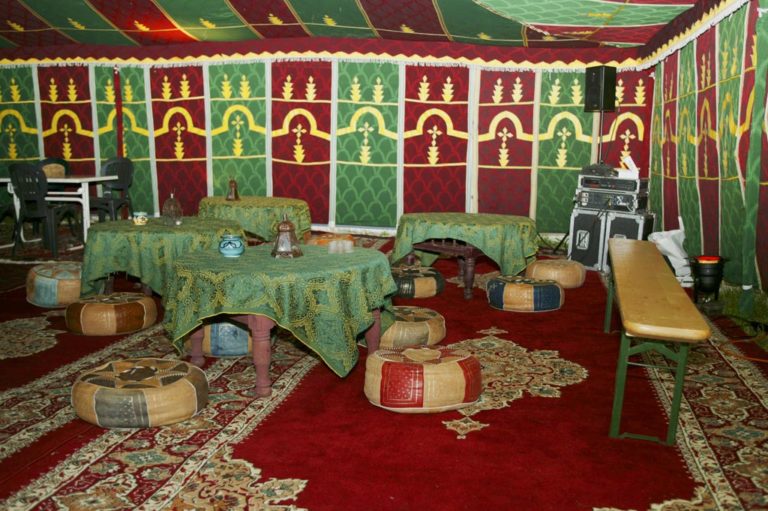
As to form: in the Arab-Muslim tradition, the tent – khaima – is not a space of haughty seclusion, but a privileged place of welcome, hospitality and conviviality, of encounter with others and with the divine. In the Judeo-Christian tradition, the tent – tabernaculum – is a place of meeting between man and God, a sometimes mobile place of prayer or a sanctuary, and therefore a place of wisdom, conducive to deep reflection.
As to substance: if we wish to escape the trap in which the advocates of civilisational confrontation, heralds of the end of history, have placed us, and so avoid the worst, there is no alternative to dialogue. But not just any dialogue. To be useful and effective, it must imperatively be authentic and sincere.
Mutual recognition cannot result from the juxtaposition of parallel monologues, of courteous and flattering speeches or of society ecumenism. Only an exchange that reveals common human values, and questioning that brings out differences of perception, can lead to the mutual learning that dispels fears, prevents conflicts and immunises against hatred. Mistrust of the Other does not come from his difference, but rather from the fact that we do not know, or know poorly, what he is and what he thinks.
It is time for those who believe in the need for dialogue to go beyond the stage of professions of faith made at symposiums held behind closed doors. They must go out into the street, meet people and help to give concrete form to the theoretical aims of such a dialogue through practical action, notably through the arts, whose languages are often universal. Facing intercommunity tensions is not reserved for an elite; it is the business and duty of all. Everyone must get involved at their own level and in their own way. The same is true at the political, economic and social levels, where a world (dis)order such as the one we are living through, which generates structural violence and is a source of conflicts, has a chance of being transformed into an order of peace only once the demand for justice has become popular, thanks among other things to the alter-globalisation movement.
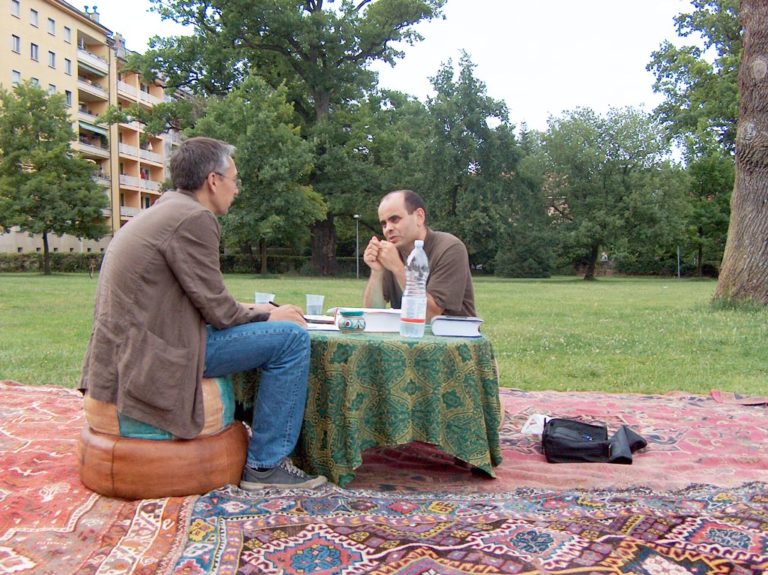
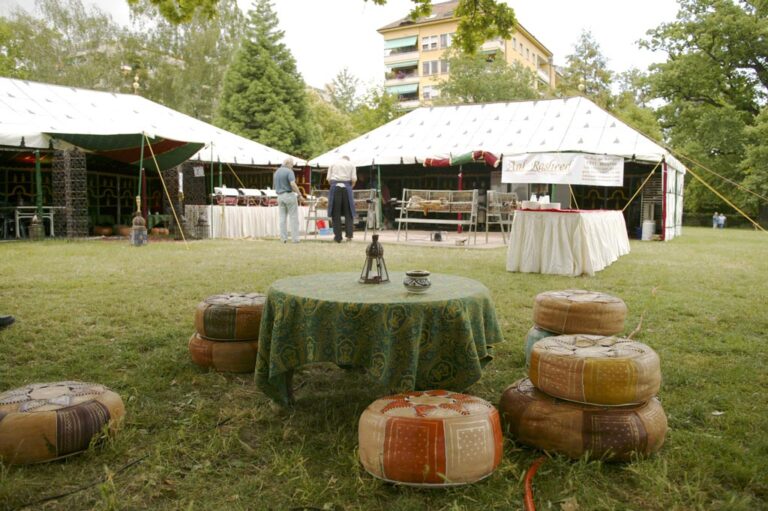
The “tent of dialogue” is intended as a space of exchange between those who believe they have something to learn from the Other, and who are aware that the Other is what they lack to become fully human. It is intended as an opportunity for Muslims to meet Geneva and its people, a modest and concrete expression of the dialogue of civilisations. And thanks to the kind participation of the people of Geneva in this event, the “tent of dialogue” will be able to take its place in the local cultural landscape.
Being together under a tent to ask questions, listen, eat, drink and enjoy ourselves is a good exercise in positive coexistence, which will confirm that diversity truly is a source of wealth and a driving force towards peace.
Abbas Aroua, Director of the Cordoba Foundation of Geneva (CFG). Article published in the Tribune de Genève of 25 June 2004