Monday 6/12/1438 AH – 28 August 2017 (last updated) 16:51 (Mecca), 13:51 (GMT)
An initiative for cooperation between Islamists and secularists, presenting an intellectual and political vision that results from consultations and meetings among more than 40 participants – experts and political actors from North Africa, West Asia and the Sahel – belonging to the secular and Islamic currents.
The parties to the initiative
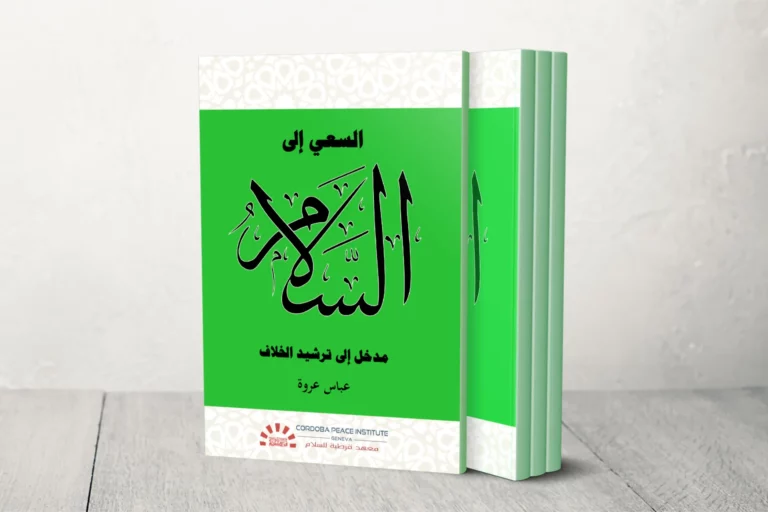
The Cordoba Foundation of Geneva took this step, with Swiss support, against the background of political transition in North Africa and West Asia, six years after the outbreak of the wave of uprisings in the region.
The initiative focuses on two political and intellectual currents with a significant presence across the Muslim world; experts from both sides, Islamist and secular, took part in the discussions on the founding vision of this framework.
The course of the initiative
The participants met in four workshops over a full year: first in Istanbul (28 February – 4 March 2016), then in Doha (21–22 September 2016), then in Istanbul (17 March 2017). The meetings were facilitated by the Cordoba Foundation of Geneva with Swiss support.
The content of the initiative’s vision
The vision stresses the importance of producing a new, shared political culture founded on the values of freedom, justice, dignity, diversity, acceptance of the other, non-exclusion, citizenship and the rejection of violence, by building alliances that cut across ideologies and contribute to the success of peaceful political transition in the region.
The participants agreed that easing polarisation between Islamists and secularists should go beyond philosophical debate and focus on the need for joint action for the common good, to strengthen society and build the state. This framework corresponds to a “common space” that requires no party to renounce its intellectual frame of reference or betray its cause.
The following is a statement summarising the experts’ discussions: Towards a space for communication and joint action
Acute polarisation in fragile contexts of political transition often leads to chaos, paving the way for the return of authoritarian regimes or for internal strife.
More than 40 participants – experts and political actors from North Africa, West Asia and the Sahel, belonging to the secular and Islamic currents – met to discuss questions of trust-building and of establishing a framework for cooperation between actors with different intellectual premises and worldviews.
Emphasis was placed on the importance of producing a new, shared political culture founded on the values of freedom, justice, dignity, diversity, acceptance of the other, non-exclusion, citizenship and the rejection of violence, by building alliances that cut across ideologies and contribute to the success of peaceful political transition in the region.
The participants agreed that easing polarisation between Islamists and secularists should go beyond philosophical debate and focus on the need for joint action for the common good, to strengthen society and build the state. This framework corresponds to a “common space” that requires no party to renounce its intellectual frame of reference or betray its cause. This framework of joint action and collective effort in the service of society can be grounded in the religious and ideological frames of reference of all parties.
Groups with different rules within their value systems and worldviews can choose to engage in joint action with other, different groups, each for its own reasons. In this way, different groups can live together in a common space, each finding the justification and motivation to do so from the perspective of its own system of rules and guiding principles. The American philosopher John Rawls calls this process of joint engagement by different groups interacting within the same space an “overlapping consensus”.
Islam leaves ample room for joint action in the interest of society: religious rules in the governance of the affairs of the city/state form a framework that provides guidance while allowing for creativity. The Charter of Medina is practical evidence, from an Islamic perspective, that coexistence and positive interaction are possible in a society of multiple tribal and religious affiliations.
This charter, which has been called the first constitutional document in human history, succeeded in doing so by introducing a new concept of social belonging made up of three distinct layers: the tribe, recognised as a social reality; social belonging to a religion, which carries a system of shared values; and belonging to the city.
The participants do not see the “space for communication and joint action”, defined in this way, as a matter of circumstantial necessity, narrow partisan interest or political manoeuvring, but as a lasting mechanism that begins during political transition and continues throughout the building of a state founded on the rule of law and good governance.
The participants recommended that joint action focus on the major challenges facing the peoples of the region with regard to civic participation and the social engagement of young people, education, and the building of new political cultures.
Participants
- Abu Yaarub al-Marzouqi, Tunisia
- Ahmed Arehmouch, Morocco
- Hmida Ennaifer, Tunisia
- Islam al-Ghomari, Egypt
- Amel Grami, Tunisia
- Amel Moussa Belhaj, Tunisia
- Oumaya Seddik, Tunisia
- Cahit Tuz, Turkey
- Jafar al-Shayeb, Saudi Arabia
- Hamed Idriss, Morocco
- Houssam Hafez, Syria
- Hakim Saheb, Algeria
- Khadija Ryadi, Morocco
- Rabih Haddad, Lebanon
- Ridha Jaouadi, Tunisia
- Riadh Chaibi, Tunisia
- Ziad Khayata, Syria
- Sami al-Saadi, Libya
- Saad Eddine El Othmani, Morocco
- Saad Wafai, Syria
- Soumia Benkhaldoun, Morocco
- Sylvain Odier, Switzerland
- Slaheddine Jourchi, Tunisia
- Tarek al-Zomor, Egypt
- Abderraouf Ayadi, Tunisia
- Abdelali Hamieddine, Morocco
- Abdelfattah Mourou, Tunisia
- Attia Adlan, Egypt
- Moujahed Makhlalati, Syria
- Mohammed al-Ahmari, Qatar
- Mohamed Hamdaoui, Morocco
- Mohamed Khouja, Tunisia
- Mehmet Zahid Gül, Turkey
- Mohamed Abdelouahab Rafiki, Morocco
- Marcell Shehwaro, Syria
- Meriem Ben Salem, Tunisia
- Moaz al-Khatib, Syria
- Maâti Monjib, Morocco
- Maan Koussa, Syria
- Moussa Bah, Mali
- Nabila Mounib, Morocco
- Noureddine Khademi, Tunisia
- Hisham Barghash, Egypt
- Youssef Choueiri, Lebanon
Source:
فضاء التواصل والعمل المشترك آلية للتعاون الإسلامي العلماني (external website, opens in a new tab) · Al Jazeera
CPI is not responsible for the content of external websites.