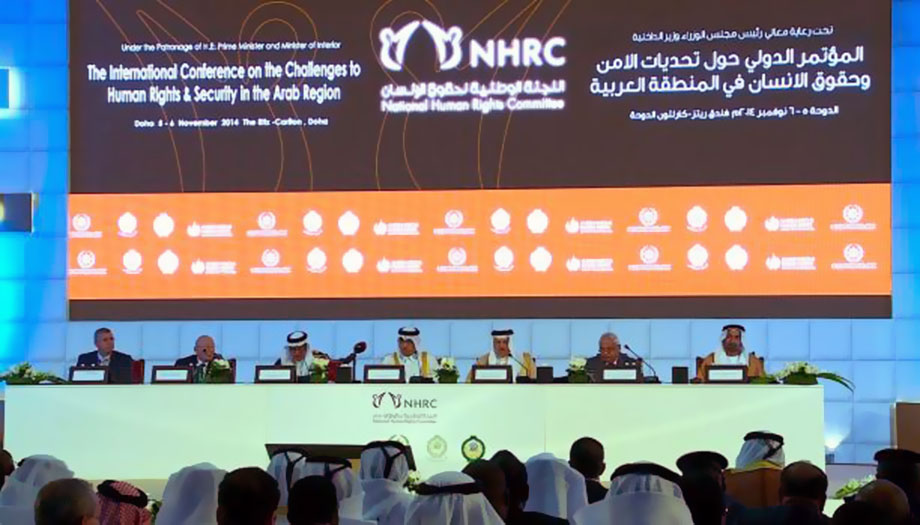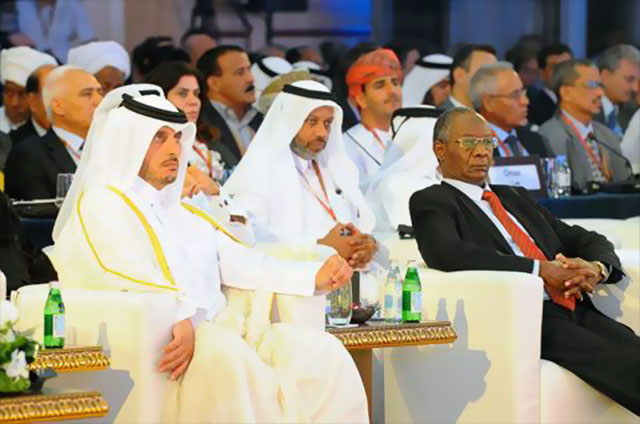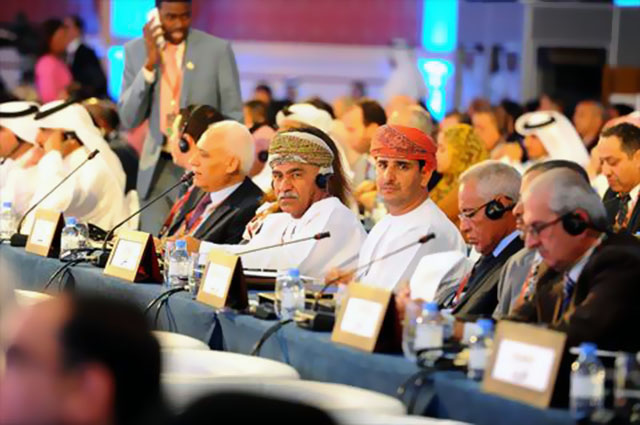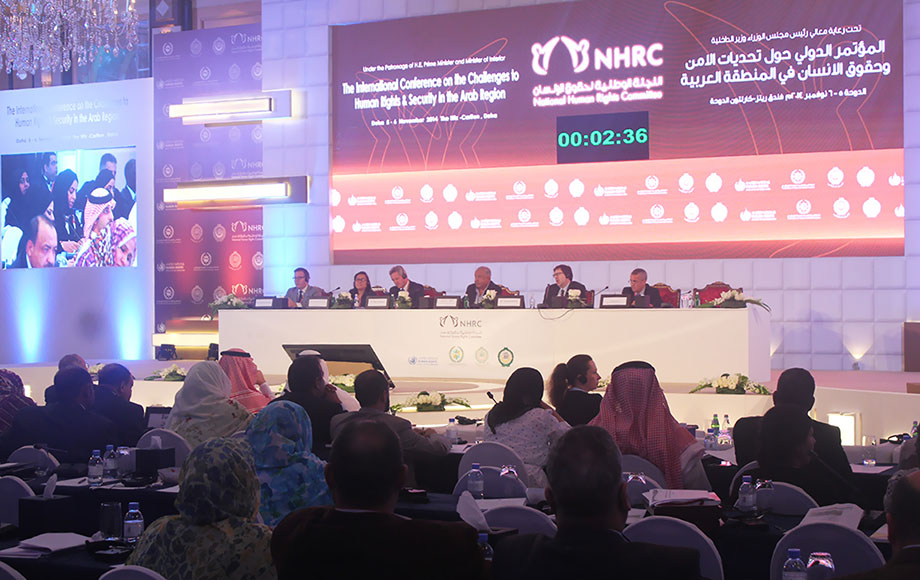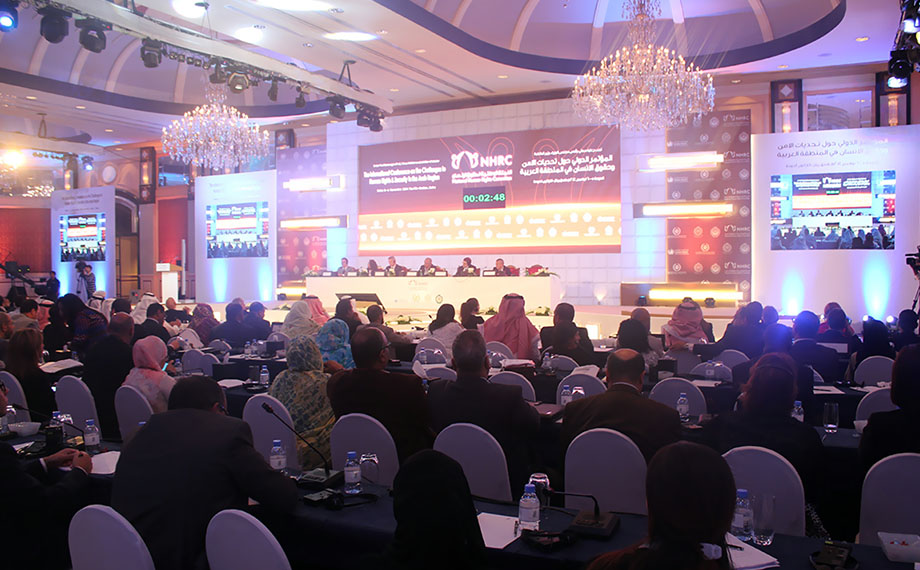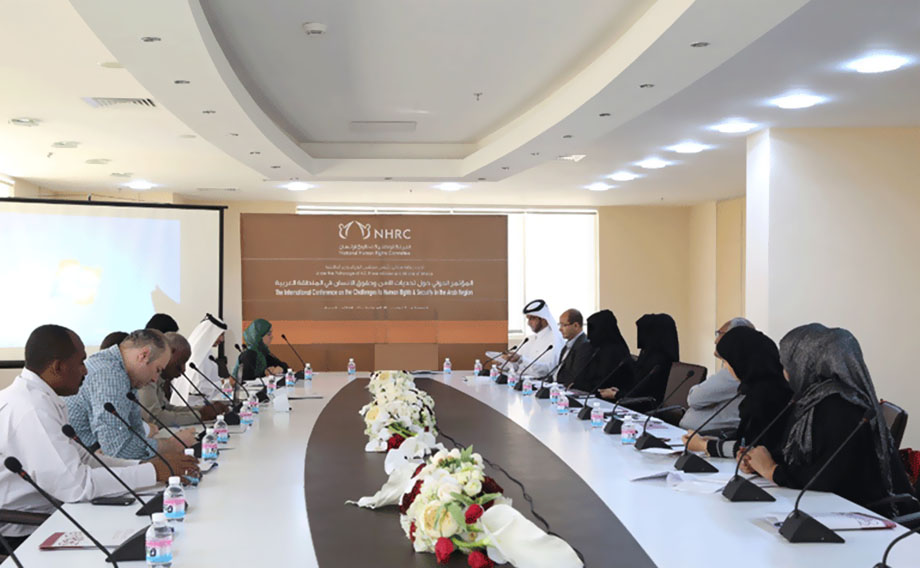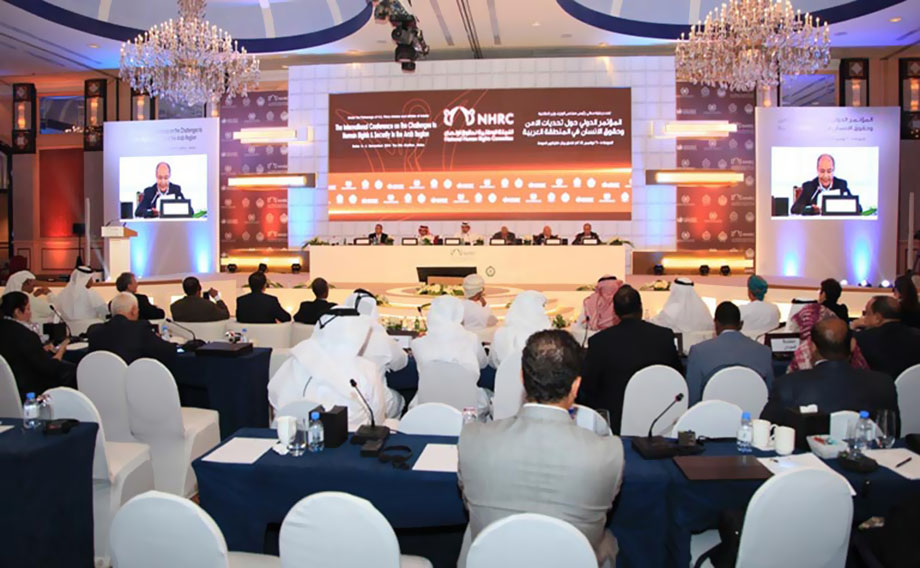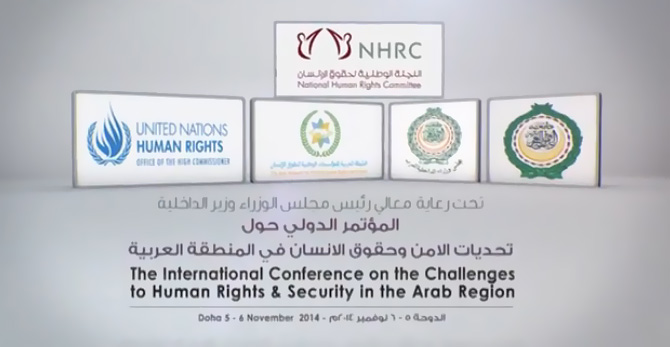
The International Conference on Security Challenges and Human Rights in the Arab Region today recommended that states establish mechanisms of oversight, accountability and answerability to prevent any possibility of law enforcement authorities abusing their powers in arbitrary or indiscriminate measures against individuals or groups.
In its statement at the closing session, chaired today by Dr Ali bin Smaikh al-Marri, Chairman of the National Human Rights Committee, the conference also urged states, with regard to their obligations, to respect the UN Declaration on Human Rights Defenders, to respect and protect journalists, and to prevent and guard against torture. It called on states holding prisoners of conscience, including human rights defenders, to release them, and to strengthen the independence of the judiciary and the transparency of legal procedures, respect international fair-trial standards and fight corruption.
In the final statement, participants urged states to adopt and implement measures to ensure compliance with the principles of the rule of law and of equality before the law without discrimination, and to avoid arbitrariness, stressing the need to harmonise Arab conventions and charters on security and human rights with international standards. They urged states that have not yet done so to accede to the relevant international conventions, in particular the Convention against Torture and its Optional Protocol, the International Covenant on Civil and Political Rights, the International Covenant on Economic, Social and Cultural Rights and the Rome Statute of the International Criminal Court.
They stressed the need to encourage states to cooperate with the special procedures of the Human Rights Council and with the UN treaty bodies, and to carry out reforms of the security and justice sectors wherever necessary.
On partnership between security institutions, national human rights institutions and civil society organisations in promoting and respecting human rights, the conference – in its statement read by its general rapporteur, Dr Btaher Boudjellal – called for continuous and regular dialogue between the security services, civil society organisations and national human rights institutions, and for considering the creation, wherever conditions allow, of a mechanism for cooperation between them, so that security measures are consistent with international human rights standards and with the 1979 UN Code of Conduct for Law Enforcement Officials.
It stressed the importance of a legislative and legal framework guaranteeing the right of assembly and freedom of expression and allowing civil society organisations and journalists to work without harassment, and also guaranteeing greater independence for national human rights institutions; the importance of complementarity among national institutions within an organised programme of education and training; and of organising meetings of the education officers of national human rights institutions to set all this out in an action plan translated into implementation programmes for these institutions. It underlined the importance of the media in developing the relationship between national institutions, civil society and security institutions, and encouraged the media to step up their efforts in this field.