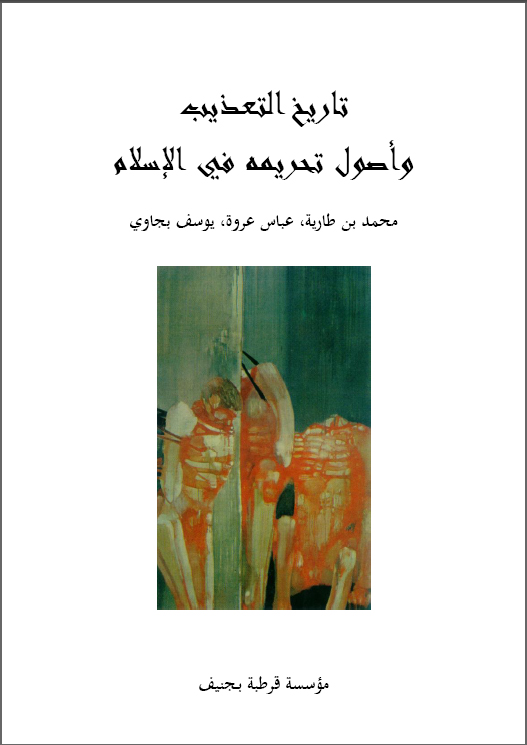
Histoire de la torture et les fondements de sa proscription en Islam
Mohammed Ben Taria, Abbas Aroua, Youcef Bedjaoui
Contents
Introduction
Chapter One: A history of torture
1. Preliminary remarks
2. Torture in ancient civilisations
3. The torture of prophets and righteous people
4. Torture in Christian society
5. Torture in Muslim society
5.1 Change over time and geographical distribution of torture in Islamic history
5.1.1 A statistical study
5.1.2 Torture under the Umayyad state
5.1.3 Torture under the Abbasid state
5.2 The purposes of torture
5.2.1 A statistical study
5.2.2 Examples of torture used to punish opponents
5.2.3 Examples of torture used to terrorise society
5.2.4 Examples of the arbitrary use of torture against subjects
5.2.5 Examples of torture used to extort money
5.2.6 Examples of torture used to gather information
5.2.7 Examples of torture used to force the accused to confess
5.3 Forms of torture
5.3.1 Torture by humiliation
5.3.2 Torture by inflicting severe physical and/or mental pain
5.3.3 Torture as a process of killing
6. Torture in the modern era
7. Conclusion
Chapter Two: The foundations of the prohibition of torture in Islam
1. Preliminary remarks
2. Human dignity and justice in Islam
2.1 Human dignity
2.2 Justice
3. The nature of torture
3.1 Torture as coercion prohibited by Islam
3.2 The view permitting the beating of the accused, and its refutation
3.3 The position of contemporary scholars on torture
4. The consequences of torture
4.1 Consequences for the tortured
4.1.1 The prohibition of damaging the human body
4.1.2 The prohibition of damaging the human mind
4.2 Consequences for the torturer
4.3 Other consequences
5. The purposes of torture
5.1 Terrorising society
5.2 Gathering information
5.2.1 The ruling with respect to the tortured
5.2.2 The ruling with respect to the torturer
5.2.3 The ruling with respect to the third party
5.3 Forcing the accused to confess
5.3.1 The presumption of innocence
5.3.2 The burden of proof lies on the claimant
5.3.3 Pain and truth
5.3.4 The invalidity of confessions obtained under torture
5.3.5 Additional remarks
6. The ruling on compensating the tortured
7. Islamic rules of conduct for law enforcement officials
7.1 The prohibition of torture and ill-treatment
7.2 The command to treat people well
7.3 The prohibition of obeying an order to torture
7.4 The command to resist torture
7.5 Criteria for the recruitment of law enforcement officials
8. Conclusion
Conclusion
Appendices
Appendix I: Al-Hajjaj ibn Yusuf, symbol of despotism in Muslim society
Appendix II: Umar ibn Abd al-Aziz, a ray of light in the darkness of despotism
Appendix III: A sample of torture cases drawn from the encyclopaedia of Abboud al-Shalji and statistically analysed from several angles