A consultative meeting, described as the first of its kind, brought together human rights and Salafi figures with representatives of the National Human Rights Council and the Interministerial Delegation for Human Rights (Tarik Benhda, March 2013).
A consultative meeting, described as the first of its kind, brought together human rights and Salafi figures with representatives of the National Human Rights Council and the Interministerial Delegation for Human Rights (Tarik Benhda, March 2013).
Hespress – Tarik Benhda
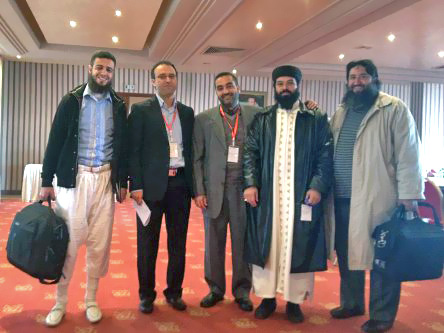 In complete secrecy and away from the eyes of the press, human rights and Salafi figures gathered last weekend at the Hotel Hassan in Rabat for a consultative meeting, described as the first of its kind, with representatives of the National Human Rights Council and the Interministerial Delegation for Human Rights, in pursuit of “a shared understanding of the Salafi phenomenon and the question of participation in public life”. The next meeting will continue the discussion in the presence of security officials and representatives of the Prison Administration and the Ministry of Justice and Freedoms.
The meeting, described as “calm, marked by a spirit of frankness, openness and responsibility”, in which the parties undertook not to disclose the content of the deliberations, was devoted at its first level to an attempt to “build” a shared understanding of “the Salafi phenomenon” – its intellectual background, discourse and contexts – with a focus on its relationship to the questions of violence and the peaceful management of differences within society.
The second level of discussion – organised by the Karama Human Rights Forum, the Adala Association for the Right to a Fair Trial and the Al-Wassit Association for Democracy and Human Rights, with the support of the Cordoba Foundation – addressed the violations and abuses that have marked the Salafi file in Morocco, as well as the different ways of handling it from the point of view of detainees, families, human rights associations and national institutions. Participants also reviewed some of the initiatives that have tried to help find a solution.
At another level, speakers raised the question of reintegration for those detained in connection with the file, and the difficulties they face inside and outside prison, whether through exclusion from reintegration programmes or the suspension of their civil and professional rights in their dealings with the administration and public services.
Commenting on the meeting, Abdelouahab Rafiki (Abu Hafs) said the consultative meeting had been “fruitful and effective”, with “promising” results, while Omar El-Haddouchi wrote on his Facebook page that the results were “very satisfactory”, adding that the “Salafi-jihadi” file would find “a solution soon”: “Every human rights activist pledged to defend the brothers until they are free, God willing.”
For his part, Anas El-Haloui, official spokesman of the Joint Committee for the Defence of Islamist Detainees, one of the parties to the meeting, said they had attended as a human rights committee “representing the majority of detainees from the Salafi current in prison”, adding that the aim of attending was “to push for a resolution of the file and the release of all detainees”.
Speaking to Hespress, El-Haloui explained that the meeting was “a positive step” for the Salafi detainees who have long been in prison, calling on the state to honour its commitments to release them and to implement the terms of the agreement of 25 March 2011.
It is worth noting that, in addition to the organisers (the Karama Forum, Adala and Al-Wassit) and the Cordoba Foundation, the consultative meeting was attended by the National Human Rights Council, the Interministerial Delegation for Human Rights, the Moroccan Association for Human Rights, the Moroccan League for Human Rights, the Moroccan Organisation for Human Rights, the Moroccan Forum for Truth and Justice, Forum des Alternatives Maroc, the Moroccan Human Rights Commission, the Moroccan League for Citizenship and Human Rights and the Moroccan Network for the Right of Access to Information, as well as representatives of the families of Salafi detainees, Hasna Mossaid and Badia Chawki (Umm Hajib), and the Salafi figures Hassan El-Kettani, Omar El-Haddouchi, Abdelouahab Rafiki (Abu Hafs), Jalal El-Moudden, Mohamed Ben Hammou and Oussama Boutaher.
Source: لقاء تشاوري يقف عند الانتهاكات في حق السلفيين بالمغرب (external website, opens in a new tab) · Hespress
CPI is not responsible for the content of external websites.