
The Cordoba Update January 2026

Dear Reader,
As we enter 2026, many of the contexts in which CPI operates continue to be characterised by profound uncertainty. A year has now passed since the formation of the transitional government in Syria, which raised hopes and questions about the future of governance, social cohesion, and everyday life for Syrians. Throughout this period, our work has reaffirmed the importance of inclusive dialogue and informed, locally grounded mediation remain in such a fragile transition.
In Somalia, the consolidation of new peacebuilding spaces is ongoing amid continuing security challenges. Our recent work with Somali Islamic scholars has emphasized the vital role played by religious and community actors in fostering reconciliation and social cohesion, even in volatile environments.
From West Asia to East Africa and beyond, CPI’s commitment remains constant across these diverse contexts: supporting locally rooted initiatives that strengthen understanding, reduce tensions, and help create the conditions for sustainable peace. As crises evolve, so does our responsibility to listen, adapt, and support our partners humbly and determinedly.
In this edition of the Cordoba Update, you will find some of the activities, publications and events that took place during the second half of 2025, as well as two articles, one by Abbas Aroua on “The Role of Advisers in Mediating Worldview Conflicts” and the other by Enver Jusufovic on “Religious and community dynamics of Islam in Ivory Coast and Benin”.
We thank you for your continued interest in our work and wish you a Happy New Year 2026.
The CPI team

News of the Institute
1) Workshops / Trainings
Fiqhi Pathways:
– CPI conducted a field mission to Syria from 22 to 28 September 2025 in Damascus, An-Nabek, Aleppo, and Idlib. The mission aimed at gaining a sense of context nine months after the fall of the Assad regime. CPI met a score of Syrian actors including government officials, figures from different communities, and civil society actors.
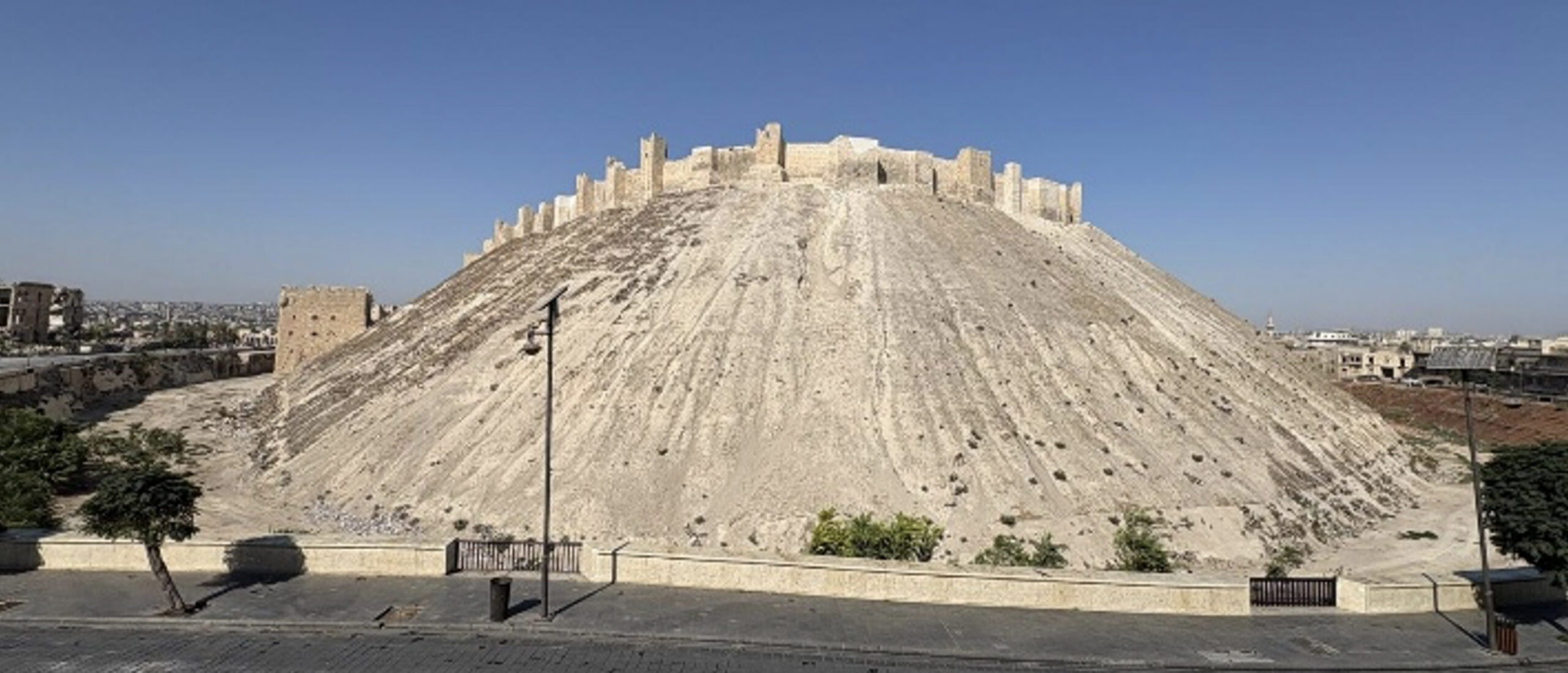
– Thanks to the support of the Swiss Federal Department of Foreign Affairs and the Finnish Ministry of Foreign Affairs, the Fiqhi Pathways project has been extended to April 2027. Fiqhi Pathways is a process support initiative for violence reduction and dialogue engagement with religiously motivated militant groups in West Asia and Africa..
Islamic Jurists and Armed Group Behavior: Crafting Conflict Solutions
Following the policy briefings organised in Nouakchott on 20 January and in Brussels on 18 June 2025, which aimed to present the findings of a research project co-directed by CPI the Center for Security Studies (CSS) at ETH Zurich, and co-funded by the Templeton Religion Trust (TRT) and the Swiss Federal Department of Foreign Affairs (FDFA), to diplomats, policymakers, and researchers, and to discuss these findings with them, the CSS published a paper in their Policy Perspectives series to facilitate the wider dissemination of the research findings.
Emanuel Schäublin. Islamic Jurists in Conflict: Negotiating Governance. Policy Perspectives Vol. 13/6. CSS/ETH Zurich, December 2025.
Building Bridges:
Between June and December 2025, the Building Bridges project, funded by the European Union, advanced its work in strengthening religious and community leadership across Benue, Nasarawa, and Plateau States in Nigeria with partners Development Initiative of West Africa (DIWA) and Dar Al-Andalous Center (DAAC).
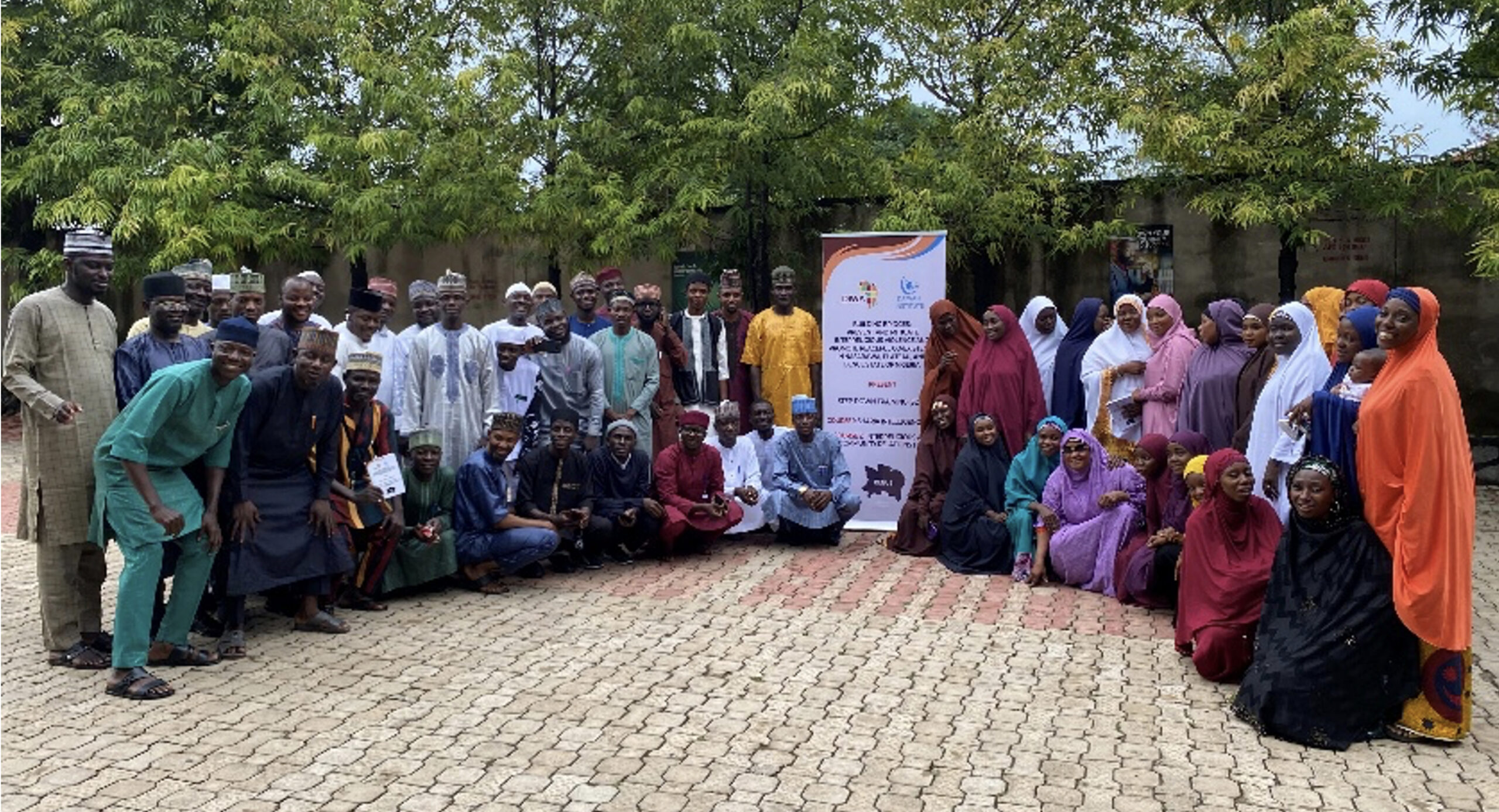
Throughout this period, the project delivered a comprehensive series of Training of Trainers and subsequent community-level trainings, reaching more than seven hundred Muslim and Christian leaders, teachers, youth representatives, women leaders, and members of the Miyetti Allah Cattle Breeders Association of Nigeria. The training activities focused on peaceful coexistence, non-violent approaches to conflict, mediation skills, and the promotion of Islamic and Christian teachings that support social harmony and mutual respect.
In parallel, the project facilitated interfaith educational dialogues involving students and teachers, fostering an environment in which constructive engagement can counter fear, misconceptions, and religiously motivated tensions. The period also saw the implementation of the “Diapraxis One” initiative, which brought together alumni of the training programs to collaborate on practical, community-based actions addressing shared local challenges.
Taken together, these activities further strengthened community resilience, reinforced interreligious trust, and contributed to the development of local capacities for cooperation and the prevention of violent conflict.
Path to Peace:
As an advisor to this project, CPI continued to support DAAC in implementing activities aimed at fostering reconciliation between communities and former combatants in North-East Nigeria. In addition, CPI supported the implementation of an evaluation designed to identify gaps within ongoing reintegration programs for former combatants, with the objective of determining areas for improvement in the short, medium, and longer term. CPI also provided guidance in the development of the next phase of the project.
Somalia:
In September 2025, a project was launched by CPI with the support of the UNDP to build the capacity of a group of 40 Somali Islamic scholars in the field of conflict transformation and social cohesion from an Islamic perspective. The project also aimed to provide process design support for establishing a competent peacebuilding community across Somalia, with a deep understanding of, and commitment to, peacebuilding and social cohesion. A one-week introductory training session was organised online from 15 to 19 December 2025.
2) External Events
– From 31 August to 4 September 2025, CPI contributed with the Center for Security Studies at ETH Zurich to a capacity building workshop in peacebuilding at the Somali Higher Institute for Strategic and Security Studies (HISS) in Mogadishu.
– On 27 – 31 October 2025, CPI contributed to the 2025 edition of the Religion and Mediation Course (RMC) held in Basel on the theme of “Armed Contestations over Governance in Afghanistan, Mali, and Syria”. The RMC is organised by the Culture and Religion in Mediation Program at the Center for Security Studies ETH-Zurich and the Swiss Federal Department of Foreign Affairs, in collaboration with the Network for Religious and Traditional Peacemakers, and the Ministry for Foreign Affairs of Finland.
3) CPI in the Media
Cross-Cultural Religious Literacy (CCRL) – A Tool in Conflict Transformation
Interview with Abbas Aroua on YouTube | Love Your Neighbor Community
3) Reports
CPI Annual report 2024 | PDF
Articles
 |
The Role of Advisers in Mediating Worldview Conflictsby Abbas Aroua
|
 |
Religious and community dynamics of Islam in Ivory Coast and Benin.by Enver Jusufovic
|