News of the Institute
Zanzibar, Tanzania – On 14-18 June 2021, CPI and its Tanzania partner, Friends of Zanzibar, completed a ToT training on conflict transformation for 16 students and youth actors. The training concluded a two-year project on social cohesion and promoting civic alternatives to violence in Zanzibar, with support from the Embassy of Switzerland to Tanzania. For two years, over the six quarters of the project, community leaders (17), Imams (40), students (30), and NGO actors (30) have received training in conflict analysis, negotiation, mediation, and social cohesion skills. Besides, 45 journalists representing 28 public and private media organizations (newspapers, radio stations and TV channels) have received training in peace journalism. Furthermore, 30 community actors from Pemba received training and implemented a community-based early warning rapid response mechanism in the run-up to the general elections in late 2020. During the CoVid-19 pandemic, a prevention handbook was translated into Kiswahili and 2000 copies were distributed in Tanzania and nine neighboring East African countries. The ToT training aims at building local training capacity to ensure the sustainability of the results of the project in different segments, including the peace clubs the students set-up on their university campus in the course of this project.
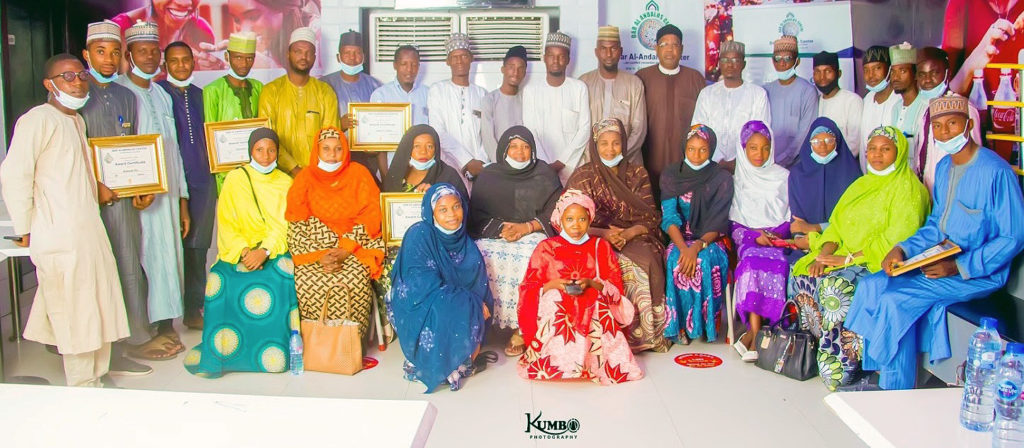
Nigeria – Dar El Andalus Centre, CPI’s partner in Nigeria, organized a remarkable Literary Workshop and Competition gathering more than 30 local authors.
Participants received training on constructive alternative narratives which respond to extremist discourse and on media ethics before writing a compelling story in Hausa (West Africa’s most widely-spoken language).
An awards ceremony for the 5 best scripts was held on May 30, 2020. Congratulations to all who participated!
Publication: Ideological depolarization in North Africa. Abbas Aroua. Research Paper Series. Cordoba Peace Institute – Geneva (2021)
Ideological polarization and its management represent a major challenge during democratic transition and determine the success or failure of the transition. This contribution first tries to show the negative impact of acute ideological polarization on the democratic transition by taking as examples the experiences of Algeria, Egypt, Libya, Morocco and Tunisia. It then examines the political scene in North Africa and the ideological tensions within it and underlines the importance of avoiding the trap of considering North African ideological currents as monolithic blocs but rather as broad spectra comprising actors with various political attitudes and behaviors. It also exposes models that help to think about the management of difference and the strengthening of cohesion in a pluralistic society drawn from Western and Islamic traditions and proposes the “safe mediation space” as a mechanism of ideological depolarization.
Dépolarisation idéologique en Afrique du Nord