The Group of Swiss Muslims presented its recommendations at a press conference in Bern on Friday 16 March 2012
The Group of Swiss Muslims presented its recommendations at a press conference in Bern on Friday 16 March 2012
In 2009, the Swiss people voted in favour of an initiative to ban the construction of minarets. The authors of the initiative argued that minarets are symbols of a “politico-religious claim to power that is contrary to the Constitution”, which had to be curbed or else “Islamist circles would try to impose a legal system based on sharia”. The Muslim population living in Switzerland, whether practising or not, was stigmatised and hurt by the majority vote.
Since then, various circles in Switzerland have worked towards understanding and reconciliation, well beyond the anti-minaret initiative. The most recent example is the information recently published on the dialogue between the federal authorities and the Muslim population (external website, opens in a new tab). In parallel, an independent and complementary initiative was launched by a group of citizens of Swiss nationality and Muslim faith, brought together at the initiative of the Cordoba Foundation of Geneva. This Group of Swiss Muslims (GSM) analysed the motivations behind the vote and outlined concrete initiatives in response to this worrying message.
Through its vote, the Swiss population wanted to send a signal about a sense of unease. But what exactly is the content of this message? Is it a reluctance on the part of Muslim immigrants to integrate? Yet many Muslims in Switzerland were born in Switzerland and are citizens, and conflicts over living together are rare. Are we afraid of losing our “Swissness” by sharing it with diverse religious and cultural horizons? Is it a reluctance on the part of Swiss society to learn to live with interculturality? As Khaldoun Dia-Eddine, a member of the GSM, puts it, the weak representation of Muslims in Swiss public life may explain distorted perceptions: “ The underlying problem raised by the ‘anti-minaret’ initiative is linked to the negative image of Islam and Muslims in Swiss society. The GSM proposes to act to promote the full participation of Muslims in society and to open channels of communication in order to distinguish between prejudice and reality »
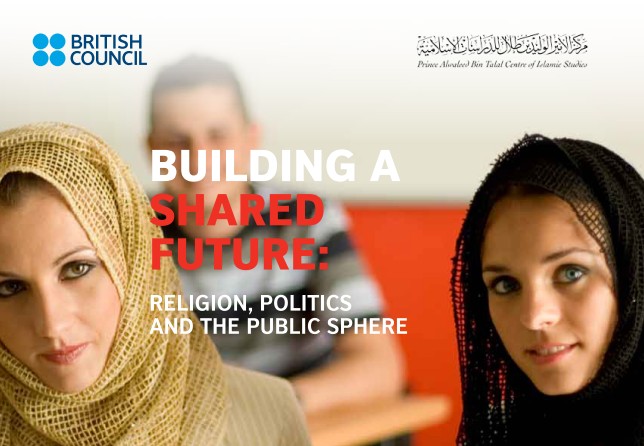
Today, the GSM is publishing a catalogue of recommendations for living better together, addressed to Swiss society, Muslim communities, the authorities and the media. Reviewing what is currently being done in the country to promote inclusion and cohesion, the brochure proposes complementary actions, as a priority in the fields of communication and citizenship. Communication, because better information and platforms for genuine, critical and empathetic exchange make it possible to overcome reluctance and defuse the mechanisms of fear and rejection. Citizenship, because Muslims in Switzerland must be able to participate fully in social, political and associative life and make their contributions to society visible.
Beyond a sterile debate on supposed cultural incompatibilities, we must develop our understanding of what it means to “be Swiss”: above all, it means living together, building and contributing to the common good. It also means abandoning the myth of a religious or cultural homogeneity that has in fact never existed, and working together for better coexistence in a pluralist society.
The results of the GSM’s work are available as brochures of recommendations in five languages (German, French, Italian, Arabic and English).
CPI is not responsible for the content of external websites.